SoSafe helps organisations reduce human-related risk, strengthen everyday security behaviour, and run awareness programmes at scale.

Cybersecurity
Strategic IT cost reduction: how to improve efficiency without increasing risk
Reduce IT costs without creating new risks. Learn how to create financial headroom while maintaining operational resilience and security.
Overview: IT cost reduction
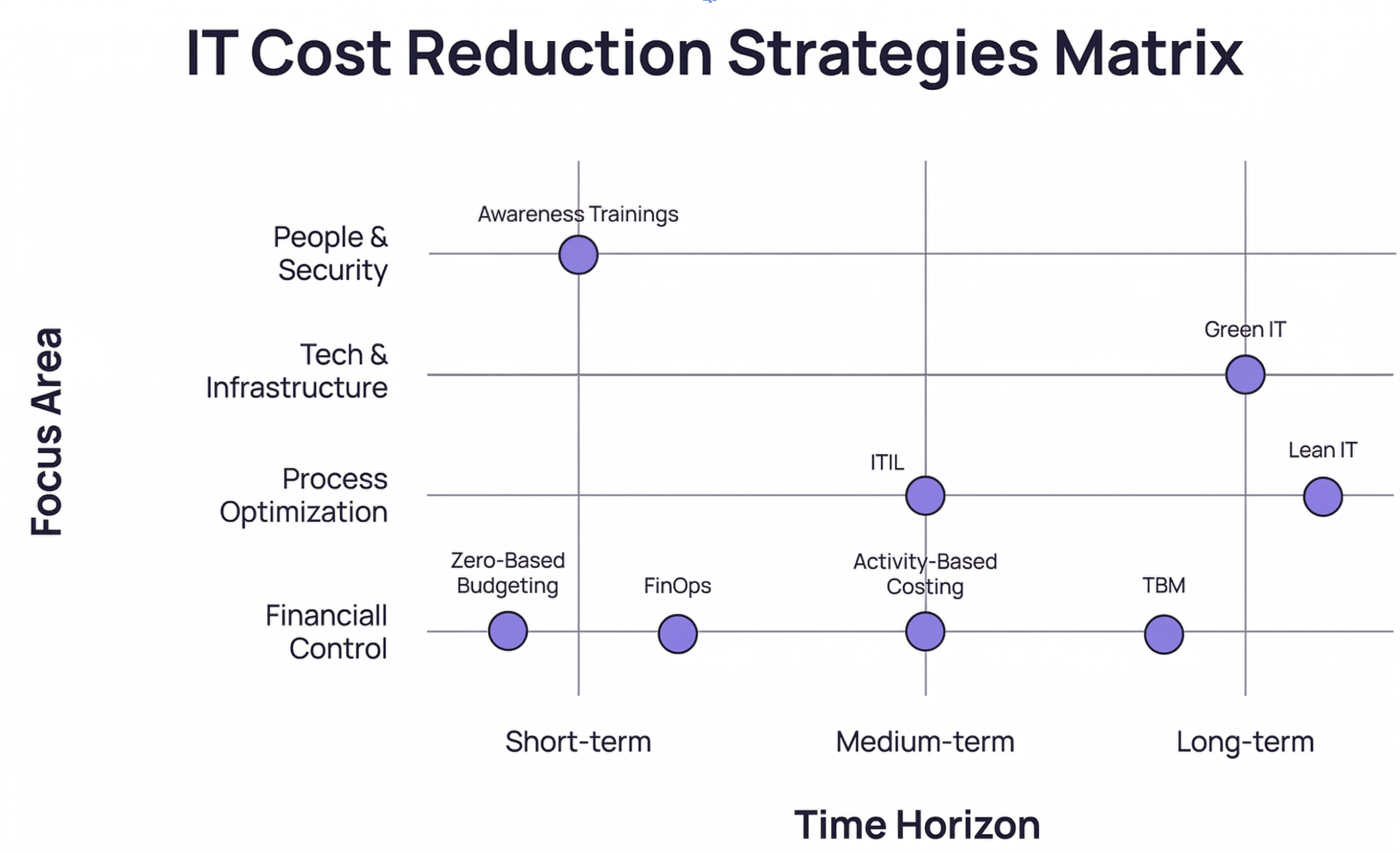
- Effective IT cost reduction requires a strategy that works across short-, medium-, and long-term planning horizons.
- FinOps and zero-based budgeting can improve cost visibility and control in the short term.
- Activity-based costing and ITIL can help improve process efficiency and cost accountability in the medium term.
- TBM and Lean IT can support a more efficient, business-aligned IT operating model over the long term.
- SoSafe helps organisations reduce human-related security risk while supporting efficient, scalable security operations.
IT cost reduction: save today without creating problems tomorrow
Reducing IT costs sounds simple. In practice, it rarely is. Every cut changes something: a tool is removed, a process is shortened, or support is scaled back. If that happens too quickly, the savings on paper can turn into higher costs elsewhere through downtime, rework, security gaps, or extra pressure on already stretched teams.
In many organisations, IT costs increase not because of single decisions, but because small inefficiencies accumulate over time. That is why a strategic approach matters. Some measures can reduce spend quickly. Others take longer because they depend on process changes, supplier decisions, or new ways of working. The goal is not to cut for the sake of cutting. It is to create financial headroom without weakening the systems, people, and controls your organisation still depends on.
This guide shows how to do that in a structured way. It breaks IT cost reduction into short-term savings, medium-term operational improvements, and long-term strategic decisions. That gives you a clearer view of where to act now, where to redesign later, and where a rushed decision could create more risk than value.
IT cost cutting strategies at a glance
| Time horizon | Framework / approach | Savings potential | Effort | Focus area | Explanation |
| Short term (0–3 months) | FinOps (Cloud) | 💰💰💰 | ⚙️⚙️ | Financial control | Improves visibility and control of cloud spend through rightsizing, reservations, and usage monitoring. |
| Zero-based budgeting (ZBB) | 💰💰💰 | ⚙️⚙️⚙️ | Financial control | Reassesses all spend from zero to identify unnecessary or low-value costs. | |
| Security awareness training | 💰💰💰 | ⚙️ | People and security | Reduces human-related risk and helps lower the volume of avoidable incidents over time. | |
| Medium term (6–12 months) | Activity Based Costing (ABC) | 💰💰 | ⚙️⚙️ | Financial control | Improves cost transparency by linking spend to services, teams, or activities. |
| ITIL Financial Management | 💰💰 | ⚙️⚙️ | Process optimisation | Standardises financial processes to improve cost control and service stability. | |
| Enterprise Architecture (EA) | 💰💰 | ⚙️⚙️ | Tech and infrastructure | Increases visibility of systems and dependencies to support consolidation and simplification. | |
| Long term (12+ months) | Technology Business Management (TBM) | 💰💰💰 | ⚙️⚙️⚙️ | Financial control | Aligns IT spend with business services and strategic priorities. |
| Lean IT | 💰💰 | ⚙️⚙️ | Process optimisation | Reduces waste and improves efficiency across IT processes over time. | |
| Green IT | 💰💰 | ⚙️⚙️ | Tech and infrastructure | Improves energy efficiency to optimise running costs and support sustainability goals. |
Short-term IT cost reduction: create visibility and act on clear opportunities
Short-term IT cost reduction works best when you start with spend that can be reviewed quickly and adjusted without major structural change. The first step is visibility. Once you can see where money is going, it becomes easier to spot underused services, duplicated tools, and costs that no longer match current priorities. Two established approaches here are zero-based budgeting and FinOps.
AI-based tools can support this work by surfacing usage patterns, anomalies, and optimisation opportunities faster. But they do not remove the need for judgement. A saving that looks obvious in a dashboard can still create operational friction if teams rely on that service in ways the data does not fully show.
Zero-based budgeting explained: every cost needs a reason
What is zero-based budgeting?
Zero-based budgeting means reviewing IT spend from the ground up instead of carrying forward last year’s budget by default. Every line item needs to be justified again based on current needs and priorities.
Why does this help?
It creates a clearer view of what still adds value and what has become routine spend. That can help you identify unnecessary licences, overlapping tools, or services that are still being funded out of habit rather than need. It is a practical way to reduce costs without starting with high-risk cuts to core systems.
McKinsey has a useful overview of zero-based budgeting and how organisations use it to reassess spend.
FinOps explained: actively managing cloud costs
What is FinOps?
FinOps is an operating model for managing cloud spend more actively. Instead of reviewing costs only after they appear, it brings IT, finance, and business teams together to plan, track, and optimise cloud usage continuously.
Why does this help?
Cloud costs can rise quickly when usage, ownership, and accountability are unclear. FinOps improves visibility into where spend is going, which resources are underused, and which services are driving costs. That makes it easier to eliminate waste, rightsize resources, and align spending more closely with actual demand. This is especially relevant for AI workloads, where GPU-intensive training and inference can become expensive without active monitoring.
How does AI help?
Many FinOps tools use AI to detect unusual spending patterns and highlight optimisation opportunities. For example, they may flag oversized resources, unexpected usage spikes, or workloads that could be scheduled more efficiently. This helps teams respond faster and manage cloud spend more proactively.
The FinOps Foundation offers a useful introduction to FinOps principles, frameworks, and practical examples.
Security awareness training: address human-related risk early
What is security awareness?
Security awareness training helps employees recognise common cyber threats such as phishing and respond appropriately. It is typically delivered in short, practical formats that can be rolled out quickly across the organisation.
Why does this help?
Human error is a frequent entry point for security incidents and often drives avoidable operational effort, from investigation to remediation. Awareness training helps reduce this risk by improving how employees identify and report suspicious activity. Over time, this can lower the volume of preventable incidents and reduce the workload on IT and security teams.
Programmes that focus on continuous, behaviour-based learning are particularly effective. Phishing simulations, for example, give employees regular, realistic practice and help reinforce secure behaviour in day-to-day work.
SoSafe supports organisations with continuous awareness training, phishing simulations, and behaviour insights to help reduce human-related risk and run programmes efficiently at scale.
Medium-term IT cost reduction: optimise structures, not just spend
Once cost transparency is in place, the focus shifts from visibility to structural improvement. Medium-term IT cost reduction is less about quick wins and more about how costs are created in day-to-day operations.
This requires understanding how resources are used across services, teams, and processes. When that becomes clear, organisations can reduce unnecessary complexity, improve accountability, and make more consistent cost decisions, without relying on one-off cuts.
Activity-based costing and ITIL provide the foundation for this by linking costs to services and standardising how those services are managed. Enterprise architecture complements this by creating visibility across systems, dependencies, and overlaps. Together, these approaches help identify where complexity drives cost, and where simplification can improve both efficiency and resilience.
Activity-based costing explained: linking costs to usage
What is activity-based costing?
Activity-based costing (ABC) allocates IT costs based on actual usage rather than distributing them evenly. In practice, this means assigning costs to specific services, teams, or business units depending on how resources are consumed.
Why does this help?
ABC makes cost drivers visible. When teams can see what they use and what it costs, it becomes easier to question demand, reduce unnecessary consumption, and make more informed trade-offs. This creates a stronger foundation for consistent, data-driven cost decisions rather than one-off reductions.
Frameworks such as COBIT and IT financial management resources provide practical guidance on applying activity-based costing in IT environments.
IT Infrastructure Library (ITIL) explained: standardise processes and reduce avoidable disruption
What is ITIL?
The IT Infrastructure Library (ITIL) is a framework for running IT services in a more consistent way. It gives teams a structured approach to areas such as incident management, change management, and service delivery, so day-to-day work depends less on ad hoc decisions.
Why does this help?
When processes are clearer, support work becomes easier to manage and service disruptions are less likely to escalate unnecessarily. That can reduce the hidden costs of rework, downtime, and inconsistent handovers between teams. ITIL’s financial management practices also support better budgeting, cost tracking, and service-level accountability.
PeopleCert provides a useful overview of ITIL and its core practices.
Enterprise architecture: make complexity visible
How does enterprise architecture help?
Enterprise architecture (EA) creates a clearer view of the IT landscape, including applications, infrastructure, data flows, and dependencies. That makes it easier to spot overlap, understand how systems connect, and see where complexity is adding cost or slowing down change.
Why is this worthwhile in the medium term?
When you can see the architecture more clearly, you can simplify it more safely. That helps you identify redundant systems, support consolidation, and reduce the operational friction that comes from disconnected tools and unclear ownership. The value is not only lower spend. It is better decisions about what to keep, retire, or redesign without creating avoidable disruption.
LeanIX offers a practical introduction to enterprise architecture and how organisations use it to manage complexity.
Long-term IT cost reduction: align IT more closely with business value
Long-term IT cost reduction goes beyond short-term savings and process fixes. It focuses on how IT is structured, how investment decisions are made, and how technology supports the business over time.
The aim is not just to run IT more efficiently, but to improve how spend, services, and outcomes fit together. Technology Business Management and Lean IT are two important approaches here. They help organisations connect IT investment more closely to business priorities, reduce avoidable complexity, and build a more sustainable operating model.
Sustainability is also becoming part of this discussion. As organisations look more closely at energy use, infrastructure efficiency, and lifecycle decisions, environmental goals can increasingly support long-term cost optimisation as well.
Technology Business Management: manage IT in a business context
What is TBM?
Technology Business Management (TBM) is a framework for linking IT spend to business services, outcomes, and priorities. Instead of looking at costs in isolation, it helps organisations understand what they are paying for, why it matters, and how technology supports the business.
Why does this help?
TBM improves decision-making. When IT costs are mapped more clearly to business value, leaders can assess where investment is justified, where spend can be challenged, and where reductions may create more risk than benefit. It also makes conversations between IT, finance, and business teams more productive because costs are framed in terms the wider organisation can understand.
The TBM Council offers a useful introduction to the framework and its core principles.
Lean IT explained: reduce waste, improve flow
What is Lean IT?
Lean IT applies lean management principles to IT operations. The focus is on delivering value to users while removing activities that do not contribute to that outcome, such as redundant tools, duplicated work, or unclear ownership.
Why does this help?
Lean IT improves how work moves through IT teams. By reducing inefficiencies and simplifying processes, organisations can lower the ongoing effort required to operate and maintain systems. The impact is typically gradual but cumulative, supporting more consistent performance and cost control over time rather than one-off savings.
Atlassian provides a practical introduction to lean principles and how they can be applied in IT environments.
Green IT: treat sustainability as an efficiency lever
How does Green IT fit into the picture?
Green IT brings energy use, hardware lifecycle, and infrastructure efficiency into IT planning. In practice, that can include more efficient data centre operations, longer device use where appropriate, and procurement choices that reduce waste as well as running costs.
Why is this worthwhile?
Green IT can support long-term cost optimisation by reducing unnecessary energy use and improving resource efficiency. The benefit is usually gradual rather than immediate, and it depends on the starting point, but it can help organisations lower operating costs while supporting wider sustainability and reporting goals.
The German Federal Environment Agency offers a useful overview of environmentally responsible and resource-efficient IT.
16 practical tips for IT cost reduction
The frameworks above help you decide where to act. The next step is execution: finding practical changes that reduce costs without creating new friction for IT, security, or the wider business.
The 16 tips below are organised around the areas where costs tend to build up fastest, including outsourcing, cloud, infrastructure, licences, process design, and cybersecurity. The aim is not to cut everything at once. It is to identify actions that are realistic, low-regret, and easier to implement within day-to-day operations.
Targeted use of outsourcing
1. Outsource standardised services selectively
Standardised, repeatable services such as 24/7 support, infrastructure operations, or routine maintenance are often good candidates for outsourcing. They are easier to define, measure, and manage through clear service levels, which can help reduce fixed costs without disrupting core operations.
2. Keep ownership of high-risk functions in-house
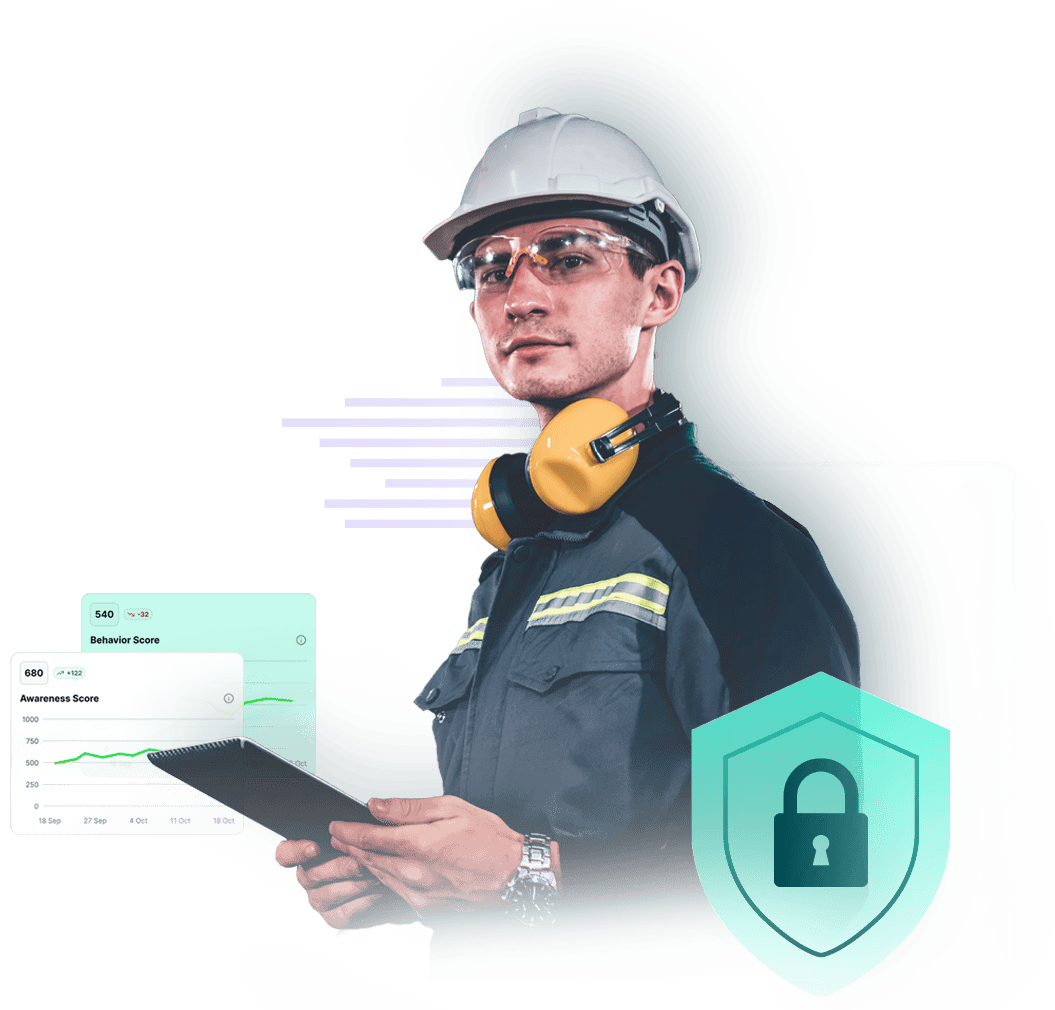
Higher-risk activities such as security governance, incident decision-making, and other business-critical controls usually need close internal ownership, even when external partners support delivery. Security awareness programmes can complement this model well. SoSafe helps organisations run training and simulations at scale, reduce manual effort, and build safer habits across the workforce over time.
Build internal resilience with less manual effort
Book a demo
Optimise cloud and infrastructure
3. Rightsize cloud resources regularly
Cloud environments often include oversized instances and underused resources. Regular rightsizing helps reduce spend without affecting the performance teams actually need.
4. Run predictable workloads more cost-efficiently
Reserved instances and spot capacity can lower costs for workloads with stable or flexible demand. This can improve budget control, especially in larger cloud environments.
5. Reassess on-premises where it makes sense
For consistently high and predictable workloads, on-premises infrastructure may still be the more economical option. The right choice depends on utilisation, flexibility needs, and total cost over time.
6. Consolidate and virtualise underused servers
Underused servers create avoidable infrastructure and maintenance costs. Consolidation and virtualisation can improve utilisation and reduce the ongoing effort required to run them.
Control licence and software costs
7. Manage software licences actively
Software asset management helps you identify unused licences, overlapping tools, and avoidable renewal costs before they become routine spend.
8. Consolidate the tool landscape
Too many point solutions increase licence, support, and admin overhead. Moving to fewer, better-integrated tools can reduce complexity as well as ongoing cost.
9. Use open-source software selectively
Open-source tools can reduce licence costs in the right context, but only when security, support, and maintenance requirements are clear from the start.
Improve process efficiency and hardware operations
10. Automate standard requests
Self-service for tasks such as password resets or access requests can reduce ticket volume and free up IT teams for higher-value work.
11. Plan hardware lifecycle decisions earlier
Earlier procurement and refresh planning can improve purchasing terms, reduce last-minute replacements, and avoid unnecessary cost pressure.
12. Look at total cost of ownership
The real cost of technology is not just the purchase price. Operations, maintenance, support, and integration often have a bigger long-term impact on cost decisions.
Use IT security to reduce avoidable costs
13. Prevent security incidents earlier
Security incidents can become expensive quickly. Prevention helps reduce the likelihood and impact of these events before response, recovery, and business disruption costs build up.
14. Run awareness programmes continuously
Security awareness training helps employees recognise and report threats such as phishing earlier. That can reduce human-related risk and lower the operational burden created by avoidable incidents, investigations, and recovery work over time. SoSafe supports this with awareness training and phishing simulations designed to help organisations build safer behaviour at scale.
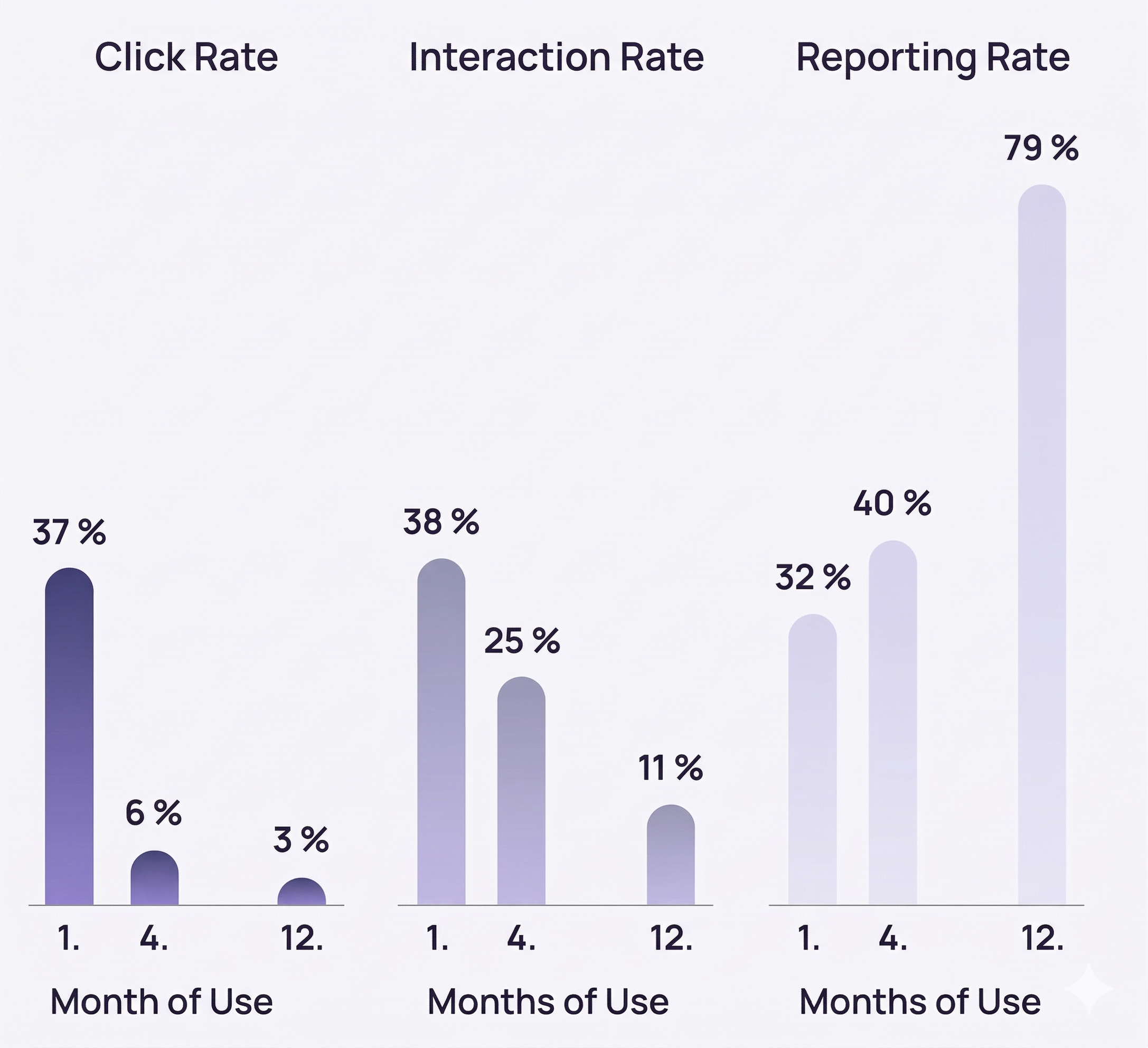
Reduce human-related risk with measurable impact
Book a demo
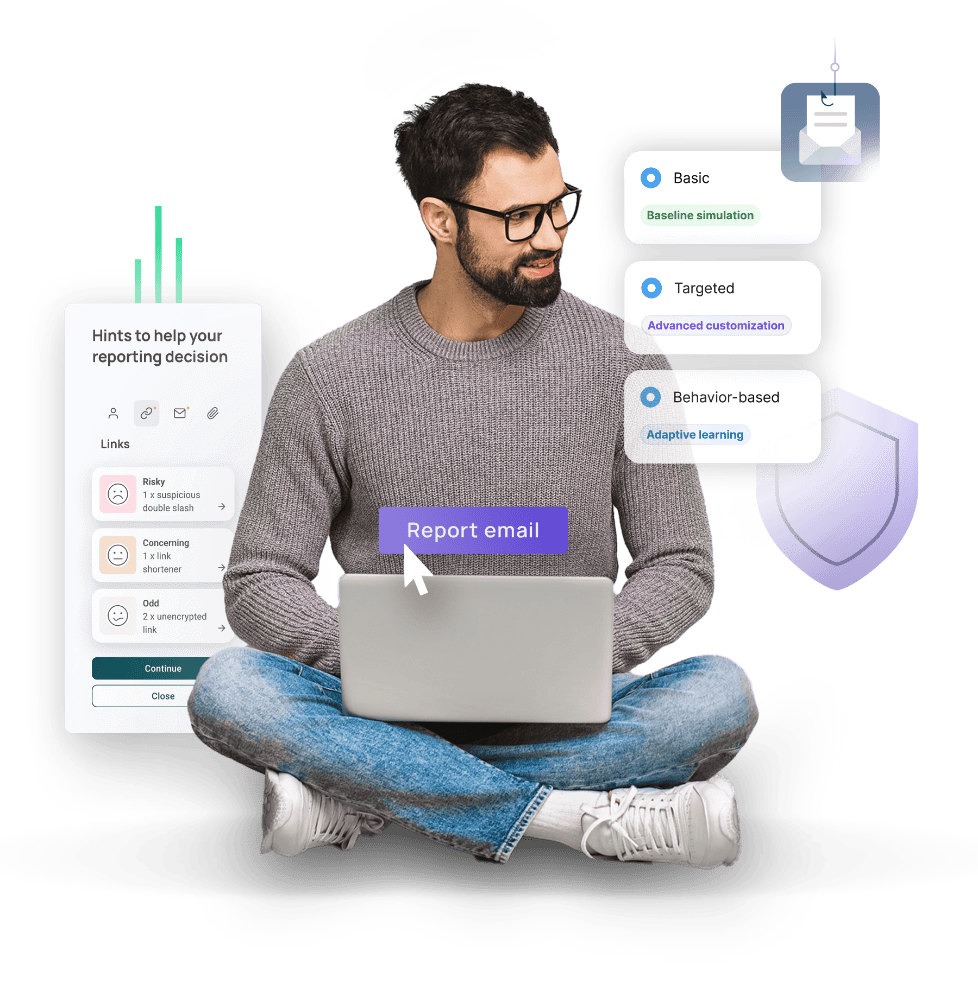
SoSafe helps organisations improve security behaviour over time and run awareness programmes without constant manual effort.
15. Build in security from the start
Integrating security into projects early helps avoid costly rework later and reduces the risk of preventable gaps in systems, processes, or controls.
16. Prepare for incident response before you need it
Clear roles, tested processes, and regular training help organisations respond more efficiently when incidents happen. Better preparation can reduce disruption, recovery effort, and the hidden costs of a poorly coordinated response.
IT cost benchmarking: understand your position before you act
Reducing IT costs starts with understanding how your spending compares. IT cost benchmarking helps you identify where you are above, below, or in line with relevant peers, and where action is worth taking.
The key is context. Absolute figures alone are rarely meaningful. What matters is how costs relate to company size, industry, operating model, and level of digitalisation.
Useful benchmark metrics include IT spend per employee, IT cost as a share of revenue, and operating cost per application or service. These indicators help highlight where costs are structurally higher, and where further analysis is needed.
Example scenarios
- Medium-sized industrial company (500 employees, in-house IT)
IT costs per employee: €4,800
Industry benchmark: ~€5,500
At first glance, overall spend appears efficient. A closer look shows avoidable licence costs driven by unused CAD tools and a lack of structured licence management.
Where to act: clean up unused licences, improve software asset management, optimise cloud usage, review support sourcing. - Digital agency (200 employees, high growth)
IT costs per employee: €11,200
Industry benchmark: ~€10,000
Higher spend is partly justified by investment in developer environments, security tooling, and flexible work setups. However, overlapping tools increase licence and admin overhead.
Where to act: consolidate the tool stack, introduce clearer ownership, improve cost visibility (e.g. FinOps), strengthen employee awareness to reduce avoidable security workload. - Insurance company (1,500 employees, legacy-heavy IT)
IT cost as % of revenue: 6.5%
Industry benchmark: ~4.2%
Above-average costs are driven by legacy systems and manual processes, leading to higher support and operating effort.
Where to act: standardise processes (e.g. ITIL), gradually modernise legacy systems, introduce self-service and automation, improve lifecycle management.
Effective benchmarking depends on reliable data. Enterprise architecture plays a key role here by creating visibility across applications, infrastructure, and services. This makes it easier to compare like-for-like and identify where complexity is driving cost.
Understand where human-related risk drives hidden cost
Book a demo
SoSafe helps organisations identify behavioural risk patterns, improve reporting behaviour, and reduce the operational effort caused by avoidable security incidents.
You might also be interested in:

 10 min read

Do you want to stay ahead of the cyber game?
Sign up for our newsletter to receive the latest cyber security articles, events, and resources. No spam, only content that truly matters.













 Reports
  Guides
  Blog
Blog  Glossary
  Perks
Perks  Customer stories
  Webinars
  Replays
  Podcast
  All events
  Human Firewall Conference
  Danger Lab
 Why SoSafe
  Careers
  Product news
  News & press
  Contact