





See our Human Risk Management Dashboard in action. Bring human risk into COBIT-related governance discussions.

COBIT framework explained: aligning IT governance with business strategy
Bridging IT security and business objectives takes more than good intentions. It takes structure. The COBIT framework helps organisations manage risk and deliver tangible value.
Contents
- What is the COBIT framework?
- COBIT 5 vs. 2019
- COBIT principles
- Domains: EDM, APO, BAI, DSS, MEA
- Components of COBIT
- Maturity Model
- COBIT certification
- Implementation
Key takeaways: COBIT framework
- Align IT strategy directly with business objectives
- Maintain a clear separation between governance and operational management
- Use maturity levels to support budget decisions with measurable evidence
- Support ISO 27001 audits and NIS2-related requirements with clearer governance structures
- Make human risk easier to identify and discuss with SoSafe’s Human Risk Management Dashboard
What is the COBIT framework?
COBIT started out as an acronym for Control Objectives for Information and Related Technology, but the name is only part of the story. What ISACA built around it is a practical governance model that ties IT decisions directly to business objectives, so technology investments serve strategy rather than running parallel to it.
At its core, the COBIT framework gives IT leaders a shared language for governance. It helps teams look at infrastructure, risk and regulatory expectations together, instead of managing them in separate silos. Because the model is not tied to one company size or industry, organisations can shape it around their own structures and priorities.
Enterprise Security Frameworks Overview
Discover the relevant frameworks for your IT governance and compliance requirements. From strategic direction to operational implementation, you’ll find comprehensive guidance here.
COBIT 5 compared with COBIT 2019
ISACA has revised the COBIT framework several times. The shift from the COBIT 5 framework to COBIT 2019 was more than a routine update. It added design factors, changed how performance is assessed and expanded the process model from 37 to 40 processes. Some people search for COBIT 6, but the current version is COBIT 2019.
The table below shows what changed and what it means in practice.
| Comparison point | COBIT 5 | COBIT 2019 |
| Governance principles | 5 principles | 6 principles |
| Framework principles | Not defined separately | 3 framework principles |
| Process landscape | 37 processes | 40 processes |
| Process terminology | Active wording, such as “Manage” and “Ensure” | Passive wording, such as “Managed” and “Ensured” |
| Performance management | Scale from 0 to 5 based on ISO/IEC 33000 | CMMI-based performance management scheme |
| System building blocks | Enablers | Components |
| Customisation | No design factors | Design factors for tailoring the governance system |
Make human risk measurable
Book a demo
The six COBIT principles for a governance system
The COBIT framework is built around a clear set of governance principles. In COBIT 2019, these principles were updated and expanded from the earlier COBIT 5 principles, giving organisations a more flexible way to connect governance with their own goals, risks and operating models.
The six COBIT principles help IT leaders shape a governance system that fits the business, rather than forcing every organisation into the same structure.
COBIT domains and processes
The COBIT framework breaks IT governance and management into five domains. These COBIT domains group related COBIT processes and make it easier to see who is responsible for direction, planning, delivery and control. In COBIT 2019, the model includes 40 processes.
COBIT Components
In COBIT 5, the building blocks of a governance system were called “enablers”. In COBIT 2019, ISACA refers to them as COBIT components. They show what needs to be in place for the COBIT framework to move from theory into daily IT governance.
The model uses seven components:
- Processes describe the activities teams carry out to reach governance and management goals.
- Organisational structures clarify who makes decisions, who approves them and who keeps oversight.
- Culture, ethics and behaviour cover the human side of governance, including how people handle security rules in everyday work.
- Information includes the data, knowledge and reporting that leaders rely on when making decisions.
- Services, infrastructure and applications cover the technology environment behind day-to-day operations.
- People, skills and competencies describe the knowledge and capabilities teams need for their roles.
- Principles, policies and frameworks turn high-level objectives into practical guidance.
IT leaders need to view these components together. Even a mature technical setup can fall short if people do not understand the rules, trust the process or act securely when it matters.
Using the COBIT maturity model strategically
Organisations need to know how their IT processes perform in practice, not just how they look on paper. The COBIT framework uses capability levels, often discussed as the COBIT maturity model, to rate processes on a scale from 0 to 5. In COBIT 2019, this assessment follows a CMMI-based performance management approach.
For IT decision-makers, the value lies in making gaps visible. A CISO might set a target level of 4 for security awareness. The assessment then shows level 2 because training is still irregular and not yet embedded in everyday behaviour. That gap gives leaders a stronger basis for budget discussions than a broad statement about rising risk.
The model can also help avoid wasted effort. Not every process needs to reach level 5. Depending on the organisation’s risk appetite, some processes need close attention, while level 2 or 3 may be reasonable for others.
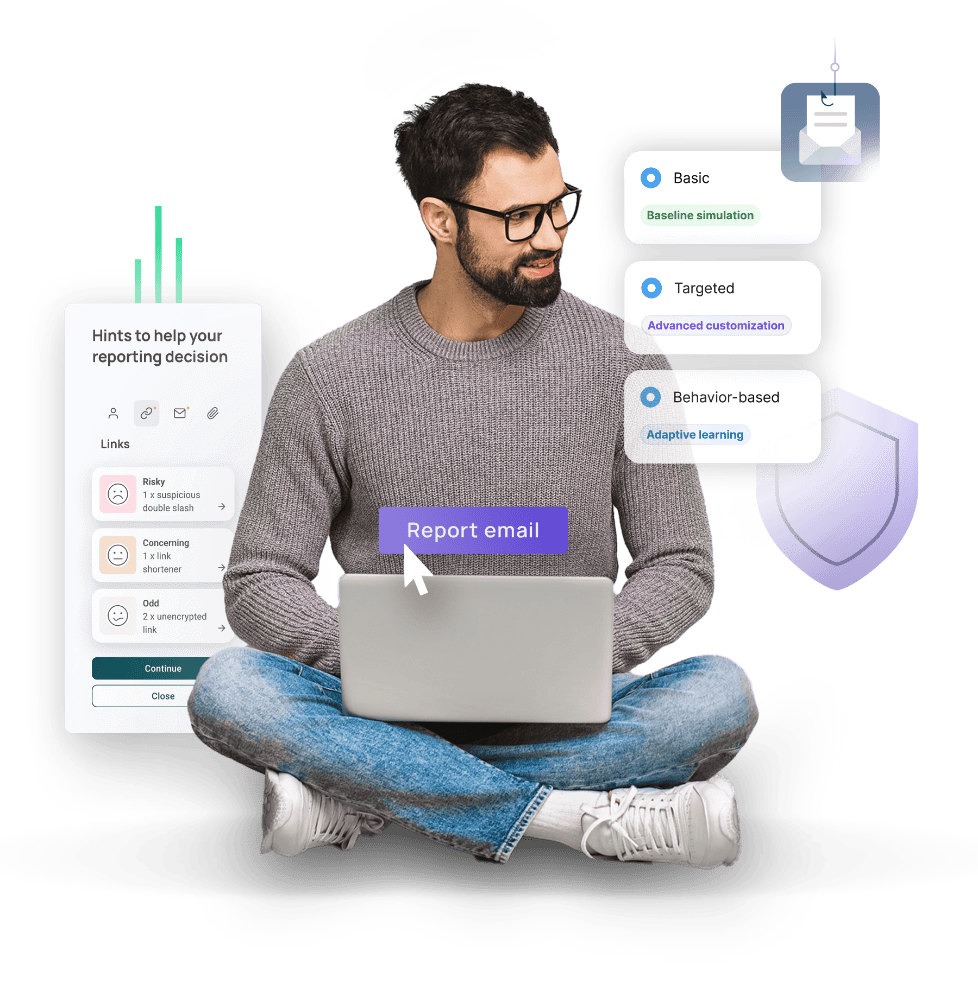
This matters in cybersecurity because human behaviour is often hard to pin down. How employees react to phishing, report suspicious activity or follow security guidance can have a real impact on risk. Bringing those behaviours into maturity discussions helps IT leaders prioritise where action is needed.
Make human risk measurable
Book a demo
See our Human Risk Management Dashboard in action. Bring human risk into COBIT-related governance discussions.
COBIT certification: cost and who it is for
A COBIT certification is designed for individuals, not organisations. It is mainly relevant for IT leaders, auditors and consultants who work with IT governance and need a recognised way to document their COBIT knowledge.
Most people start with the COBIT 2019 Foundation certificate. The next step is usually COBIT 2019 Design and Implementation. ISACA currently lists the Foundation exam at US$175, while advanced exams, training and materials may vary. Check isaca.org before booking.
For individuals, certification in COBIT can be a useful credential. For organisations, COBIT serves a different purpose. Companies usually turn to standards and requirements such as ISO 27001 or NIS2 when they need to show customers, partners or regulators how they manage security. The COBIT framework can support that work internally by giving teams a clearer governance structure before audits or regulatory reviews.
COBIT implementation: steps and success factors
Implementing COBIT is rarely a small IT housekeeping task. It usually touches priorities, reporting lines, performance reviews and the way technology decisions are discussed with the business. ISACA describes a seven-phase implementation lifecycle, but in practice, the early groundwork matters most: clear ownership, realistic milestones and senior leaders who stay involved once the project has started.
The key steps include:
- Assess the current state: Review how IT governance works today and identify what is driving the need for change.
- Define the target state: Use the design factors in the COBIT framework to design governance around the organisation’s structure, risk profile and objectives.
- Create a roadmap: Set realistic milestones and work in manageable iterations. Depending on scope, many organisations plan in cycles of around three months.
- Build skills and support behaviour change: Involve employees early, especially where culture and behaviour influence security outcomes. A supporting cyber security awareness training programme can help people understand their role in everyday security decisions.
- Measure progress: Review progress regularly and use the CMMI-based maturity model to check whether the new processes are reaching the target level.
Keeping momentum is often the hardest part of a COBIT implementation. IT leaders should communicate progress clearly, show where improvements can be measured and keep senior leadership involved after the launch.
COBIT vs. ITIL: where each framework fits
The COBIT vs. ITIL comparison is less about choosing one enterprise security framework over the other and more about understanding where each one helps. In a typical ITIL COBIT setup, COBIT gives IT leaders the governance structure, while ITIL supports the service management work that follows.
The COBIT framework is mainly concerned with what needs to be governed and why. It helps CISOs and IT leaders connect IT strategy with business goals, risk appetite and regulatory expectations. ITIL sits closer to operations. It focuses on how IT services are designed, delivered, supported and improved.
Used together, COBIT sets the governance direction while ITIL keeps service delivery consistent.
COBIT vs. ISO 27001
COBIT vs. ISO 27001 is a useful comparison because both deal with governance and control, but they are used for different jobs. COBIT helps organisations structure internal IT governance. ISO 27001 is used to build and certify an information security management system. Many organisations use COBIT to organise governance internally and ISO 27001 when they need an auditable security management standard.
COBIT vs. NIST CSF 2.0
COBIT vs. NIST CSF 2.0 is mainly a question of scope. NIST CSF 2.0 focuses on cybersecurity risk and helps organisations prioritise security activities. COBIT gives those activities a wider governance context by connecting them with business goals, responsibilities and performance management.
COBIT vs. TOGAF
COBIT vs. TOGAF looks at two different parts of enterprise IT. TOGAF helps organisations design and develop enterprise architecture. COBIT focuses on how information and technology are governed, monitored and improved over time. In practice, TOGAF often supports architectural planning, while COBIT helps keep governance and management aligned once that architecture is in use.
Scale your security
culture with ease
















 Reports
  Guides
  Blog
Blog  Glossary
  Perks
Perks  Customer stories
  Webinars
  Replays
  Podcast
  All events
  Signal Security Summit
  Danger Lab
 Careers
  News & press
  Contact