FOR MANUFACTURERS, SUPPLIERS AND INDUSTRIAL GROUPS
Manufacturing cyber security, from the office to the assembly line
- Security awareness training for office staff, shift teams and temporary workers, with or without a company email address
- Phishing and smishing simulations built on invoice fraud, fake suppliers and other attacks aimed at manufacturers
- Audit-ready reports aligned with NIS2, ISO/IEC 27001 and GDPR, with evidence for customer assessments such as TISAX
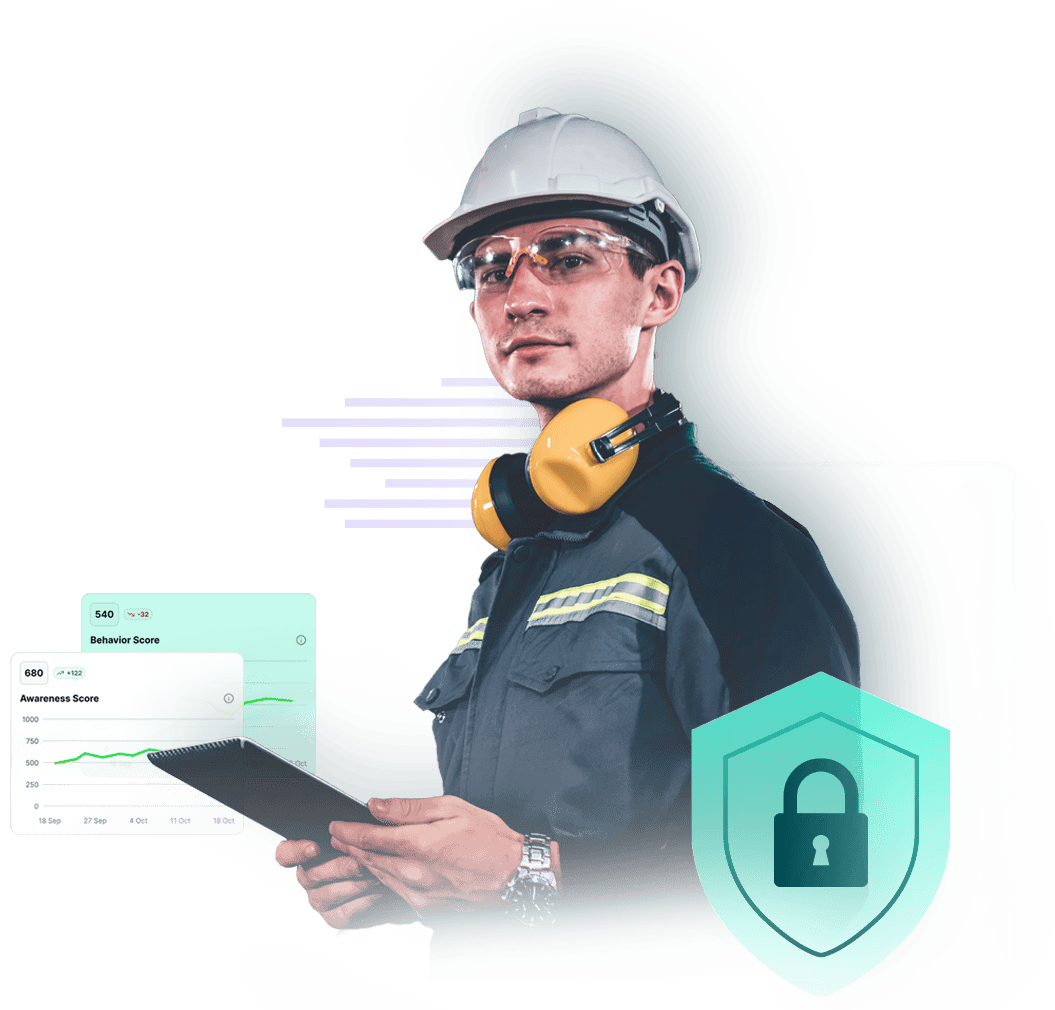
How SoSafe helps
Solutions for your manufacturing cyber security risks
Training that reaches your entire workforce
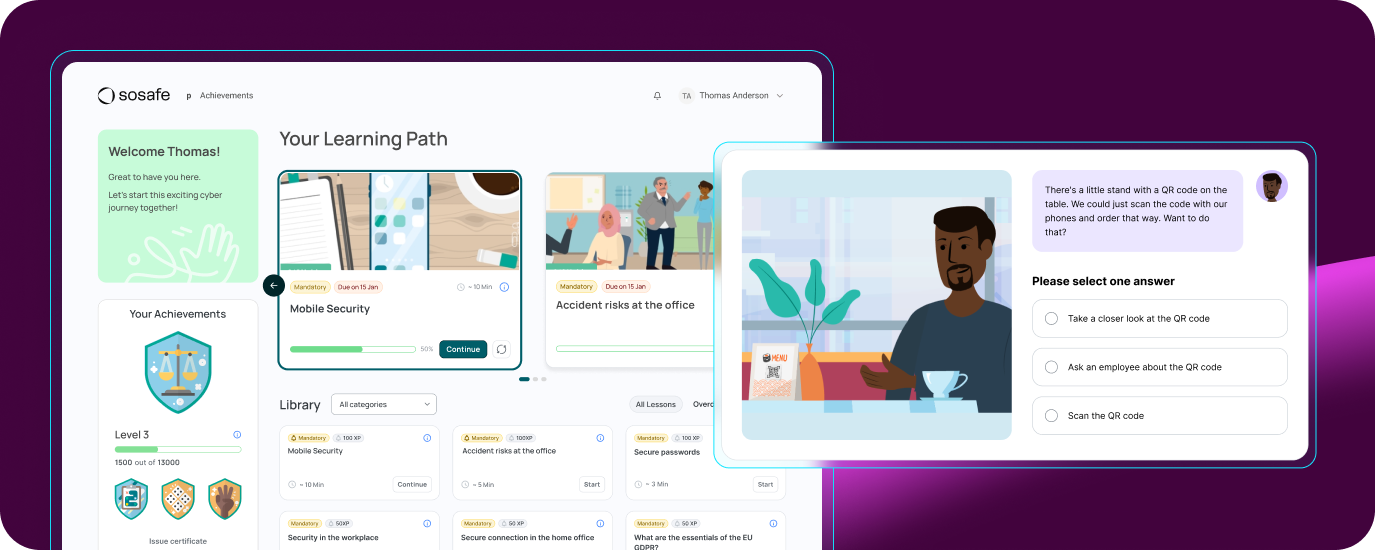
Reach every employee with a blended solution. We combine engaging digital modules for office staff with print-ready analogue training kits for your factory teams. Production staff without a company email address can also take the digital lessons, on a shared terminal or their own phone.
Simulations that mimic real-world attacks
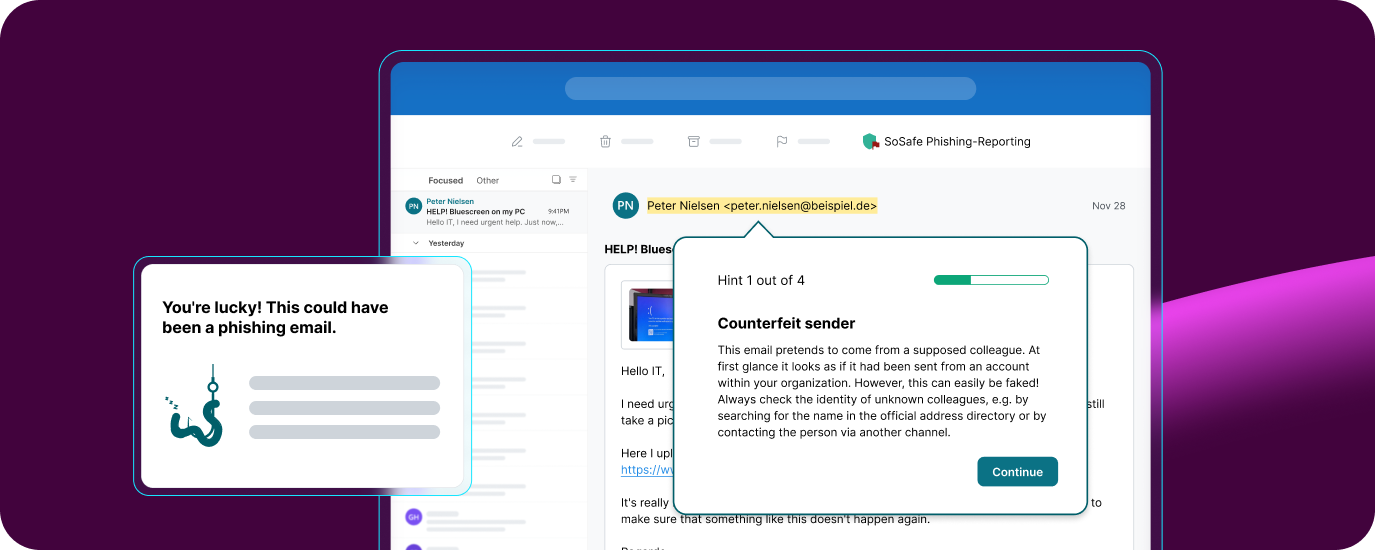
Prepare your team for threats like invoice fraud with realistic simulations. Emails and text messages imitate supplier invoices, delivery notices and changed bank details. Our integrated Phishing Report Button helps build secure habits and allows for real-time threat detection and reporting.
Audit reports that show real behaviour change
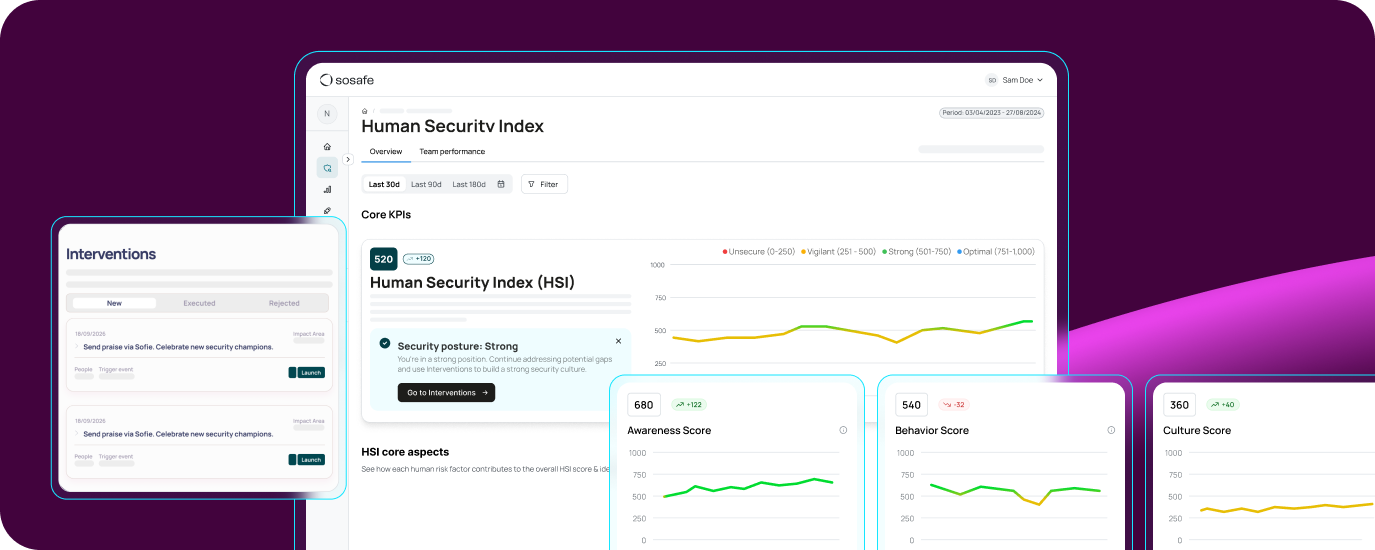
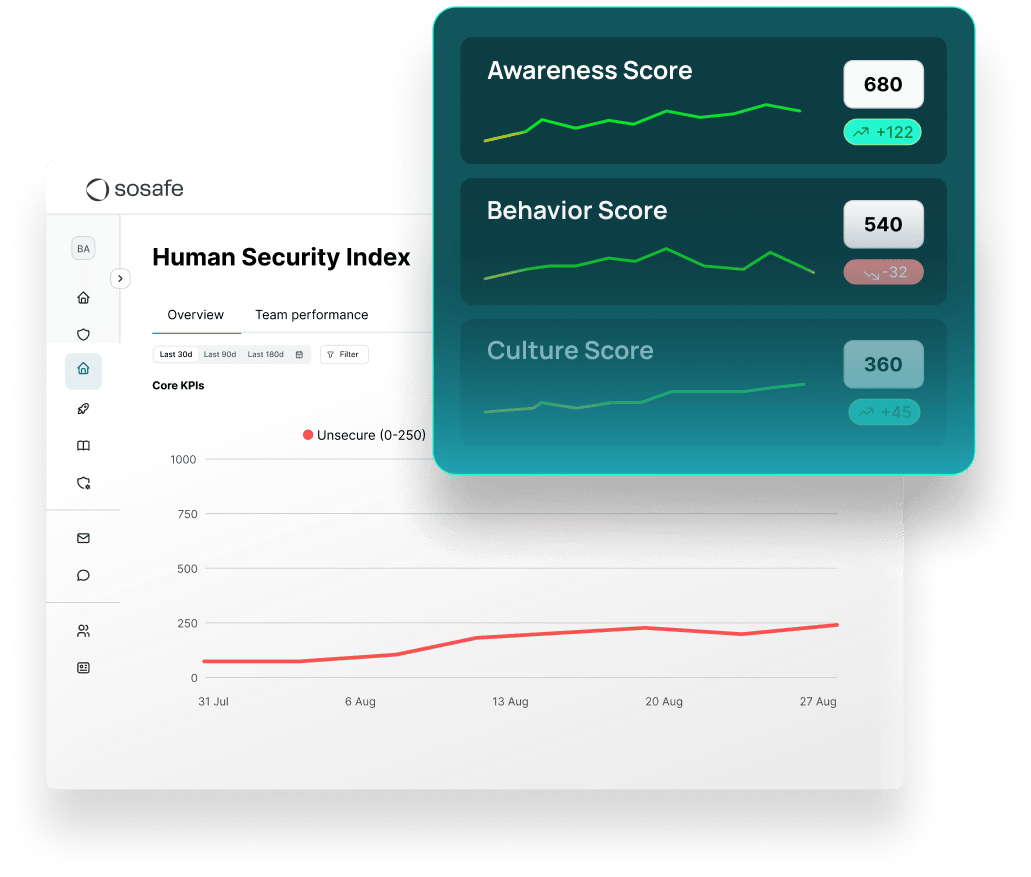
Behaviour signals become reports aligned with NIS2, ISO/IEC 27001 and GPDR. Management sees one trackable figure for manufacturing cyber security, and the security teams sees which departments need attention next.
Training that reaches your entire workforce
Reach every employee with a blended solution. We combine engaging digital modules for office staff with print-ready analogue training kits for your factory teams. Production staff without a company email address can also take the digital lessons, on a shared terminal or their own phone.
Simulations that mimic real-world attacks
Prepare your team for threats like invoice fraud with realistic simulations. Emails and text messages imitate supplier invoices, delivery notices and changed bank details. Our integrated Phishing Report Button helps build secure habits and allows for real-time threat detection and reporting.
Audit reports that show real behaviour change
Behaviour signals become reports aligned with NIS2, ISO/IEC 27001 and GPDR. Management sees one trackable figure for manufacturing cyber security, and the security teams sees which departments need attention next.
WHERE ATTACKS START
Why manufacturing cyber security starts with people

Ransomware that stops the line
Manufacturing is the #1 target for cyberattacks. For the fifth year in a row, it tops the IBM X-Force ranking of most-targeted industries with 27.7% of observed incidents (Source: IBM X-Force Threat Intelligence Index, February 2026).

Invoice fraud and fake suppliers
A long-standing supplier announces new bank details. A purchase order arrives from a customer’s buyer, one letter off in the domain. Purchasing, accounts payable and sales handle messages like these every day. That is also where people can stop an attack: a human element was present in 62% of breaches (Source: Verizon DBIR, May 2026).

A voice on the phone asking for access
Someone calls from the “service desk” and needs a code for a remote maintenance session, right now. Shift supervisors and technicians settle most things by phone, and cloned voices make a familiar voice easy to fake. Around a quarter of social engineering incidents run through the phone or social media rather than email.

Access through the supply chain
Machine builders with remote access, logistics partners, IT service providers, customer portals: every connection is also a route into your network. Third parties were involved in 48% of the breaches in the latest Verizon DBIR. Credentials taken from a partner look like a legitimate login. That is why cyber security in the manufacturing industry depends on people who notice an unusual request.
PEACE OF MIND FOR YOUR AUDITS
Compliance without complexity
Customers, auditors and regulators want proof that covers everyone, from the shop floor to the boardroom. SoSafe turns training, simulation and reporting data into evidence aligned with NIS2, ISO/IEC 27001 and GDPR, usable in customer assessments such as TISAX.


WHO GETS TRAINED
Role-based training for every team in the plant
Production and shift teams
Operators, maintenance technicians and warehouse staff train on shared terminals, on their own phones or with printed kits, without needing a company email address. Temporary staff can join on the same terms. The scenarios come from the shop floor: a text message asking to confirm a shift swap, or a USB stick left next to a machine.
Purchasing, finance and sales
These teams work with order confirmations, invoices, supplier master data and customer portals, which is what attackers imitate. Training uses the same documents: a change to supplier master data, an order confirmation with a new payment link, an urgent transfer approved outside the usual process.
Engineering, IT and OT
Administrators and engineers go deeper into privileged access, remote maintenance, handling design data and the boundary between office IT and the production network. This is where cyber security for advanced manufacturing is decided, because connected machines are only as safe as the accounts that reach them.
Management and multi-site groups
Managing directors and plant managers get a compact track focused on their decisions: which incidents need to be reported, by when, and who signs off. Groups with several plants, subsidiaries and countries can roll out one programme across all entities and still see where risk sits in each one.
Lessons that fit between two tasks
Lessons of one to eight minutes adapt to role, prior knowledge and risk profile. Someone on the packing line learns about different traps than the engineer who maintains the control systems.

Simulations from your own inbox
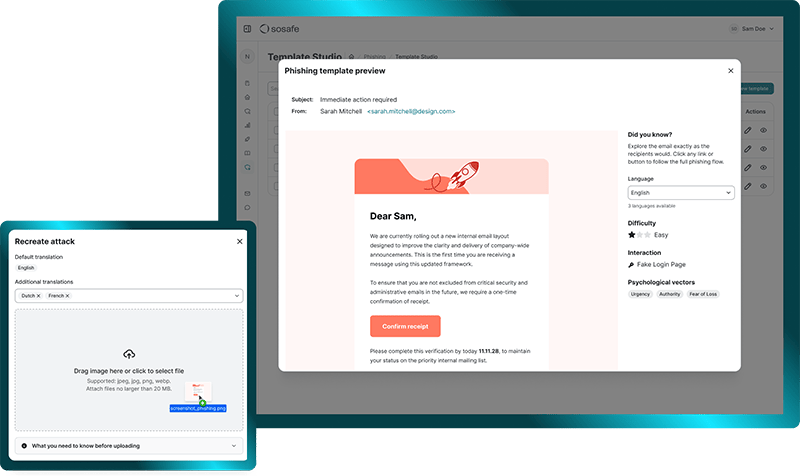
A phishing email caught in your environment can be turned into a training phishing simulation within three to four minutes and sent to the departments it was aimed at.
Phone attacks, practised in the browser
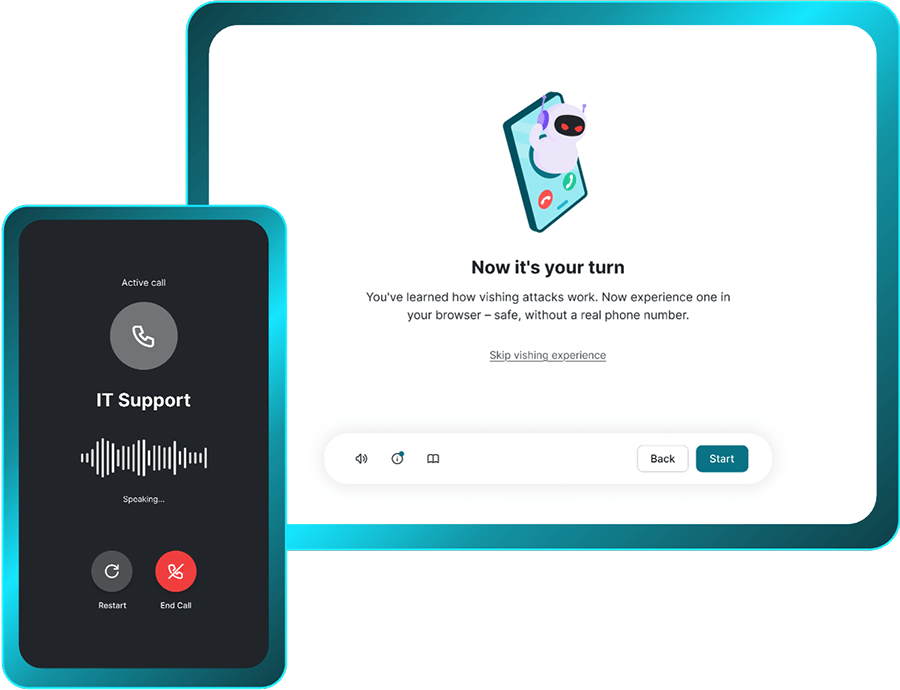
The Interactive Vishing Lesson puts employees through a realistic support call in the browser, with no phone numbers to manage. It trains how to react under pressure. Unlike email and smishing simulations, it does not measure failure rates.
From work instruction to lesson
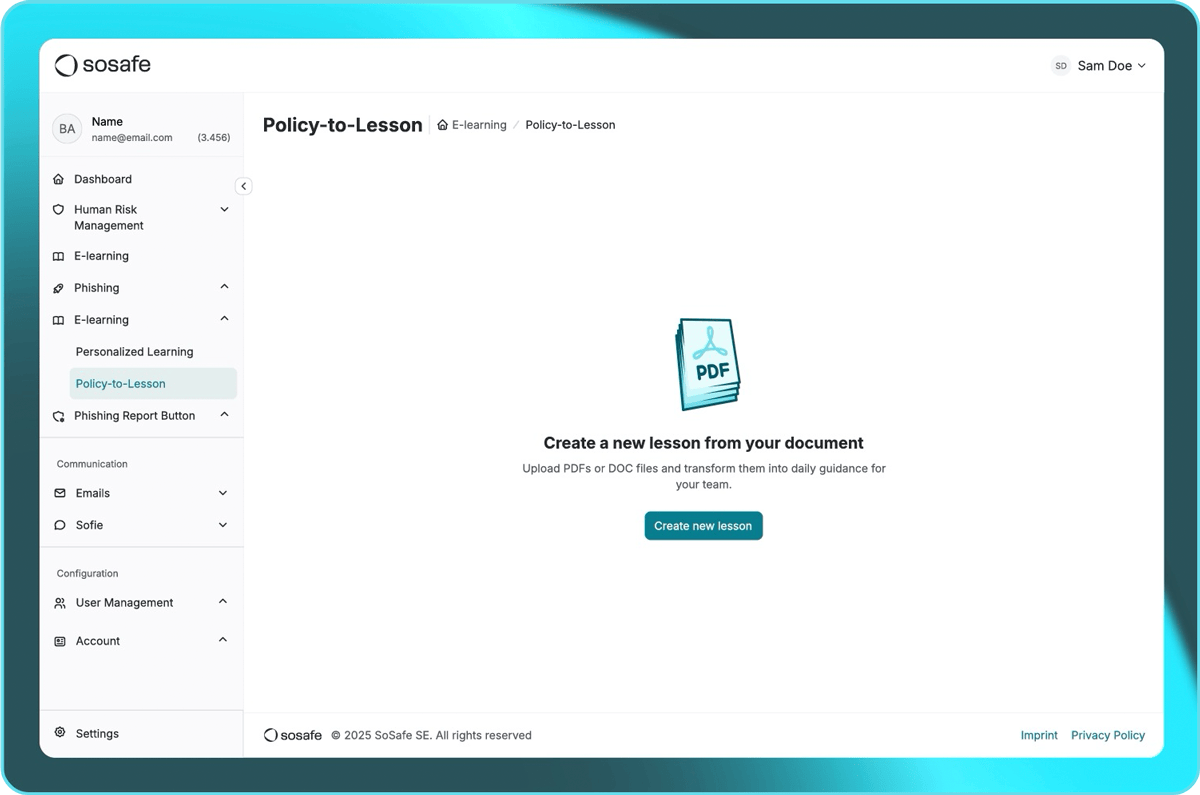
Upload an existing policy, work instruction or remote access rule. The first draft of the lesson comes back in your own wording and can be checked and published by your team.
One click to report
The report button in Outlook sends suspicious emails to one triage queue. For manufacturing cyber security, that turns every employee into an early warning: the IT team sees a new campaign as soon as the first person reports it.
Evidence when a customer asks
Pulling a report for NIS2, ISO/IEC 27001 or GDPR takes less than an hour, so your manufacturing cyber security programme has evidence ready at short notice. The Human Security Index follows behaviour change across departments over the year as one figure.

“We chose SoSafe for their evolving cybersecurity solutions, which perfectly addressed our workforce’s diverse needs, making SoSafe more of a partner than a vendor.”

David Kreft
CISO at WAGO, a German automation technology manufacturer
88%
knowledge retention after 12 months
90%
reduction in risky interactions
80%
reporting threats within 12 months
15 min
per week to run the full programme

Behaviour change you can measure in your factory and office
SoSafe is trusted by more than 6,000 organisations worldwide, and many of them rely on it for manufacturing cyber security. The figures below are based on aggregated data from live customer programmes across all industries.
Manufacturing cyber security that works with your existing systems
Users come from your directory, reported emails go to your ticketing system, and lessons open in the browser on office PCs, shared terminals or phones.
Integrations
See all the integrations




Compliance
See all our certificationsGDPR Compliant
German Engineered
EU Hosted
Manufacturing cyber security FAQs
See SoSafe at work in a manufacturing plant, office or warehouse


















 Reports
  Guides
  Blog
Blog  Glossary
  Perks
Perks  Customer stories
  Newsletter signup
  Webinars
  Replays
  Podcast
  All events
  Signal Security Summit
  Danger Lab
 Why SoSafe
  Careers
  News & press
  Contact