FOR BANKS, INSURERS AND FINANCIAL SERVICES
Financial services cyber security for the moment a convincing request arrives
- Security awareness training and phishing simulations for banks, insurers and financial firms
- Lessons of a few minutes each month, with content for payments, IT and the management body
- A programme aligned with DORA, ISO/IEC 27001 and GDPR that tracks behaviour change over time
How SoSafe helps
Solutions for your financial services cyber security risks
Training time that fits the year
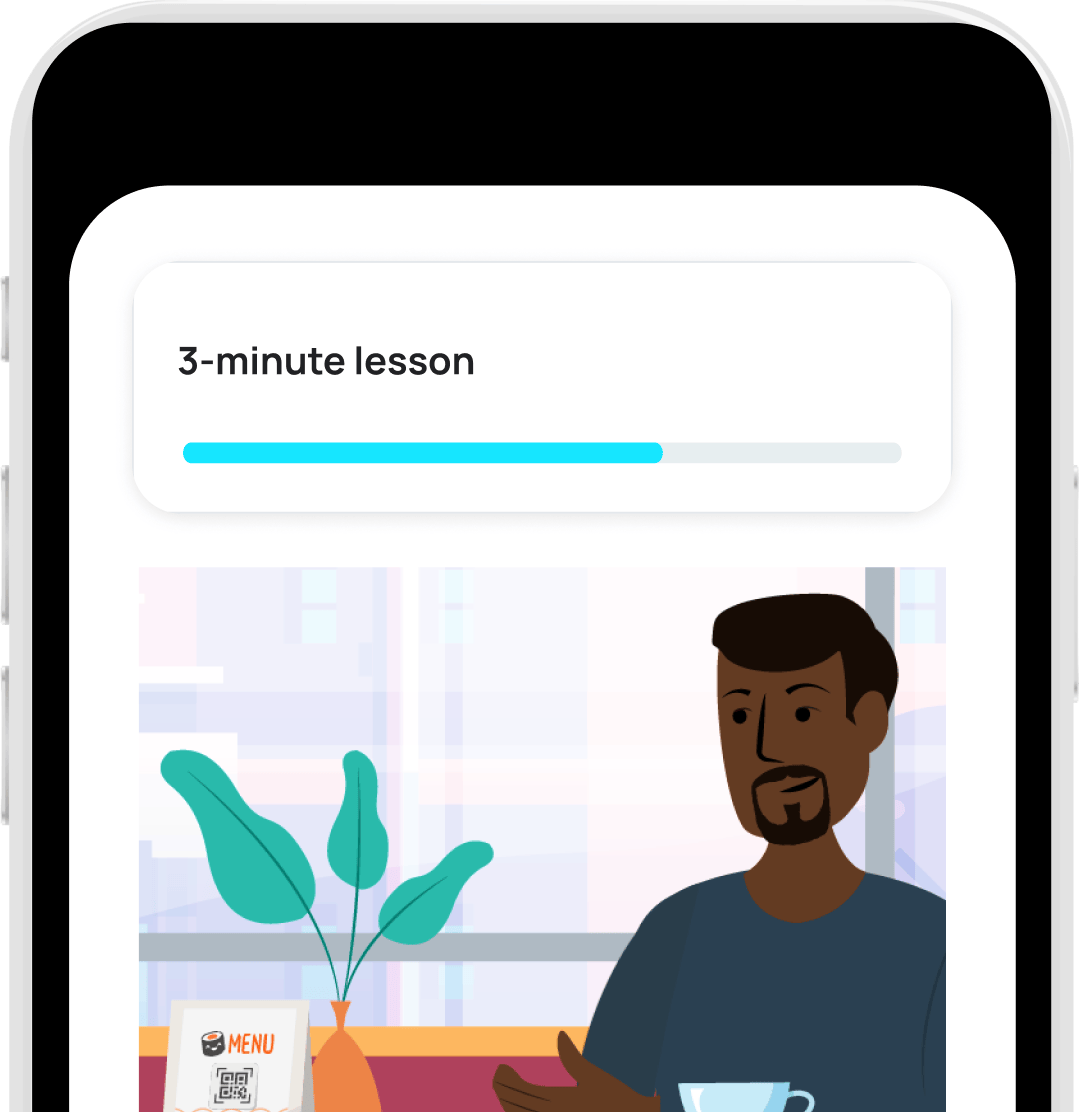
When cyber training has to fit into a few hours a year, lessons of one to eight minutes spread it across the months. People build secure habits without leaving their desk or phone line for long.
Simulations that learn from each response
A supplier reports new bank details, or a “colleague” needs a transfer before the cut-off. Our phishing simulations by email and SMS use lures like these, and by email each miss shapes what comes next.
Figures the management body can follow
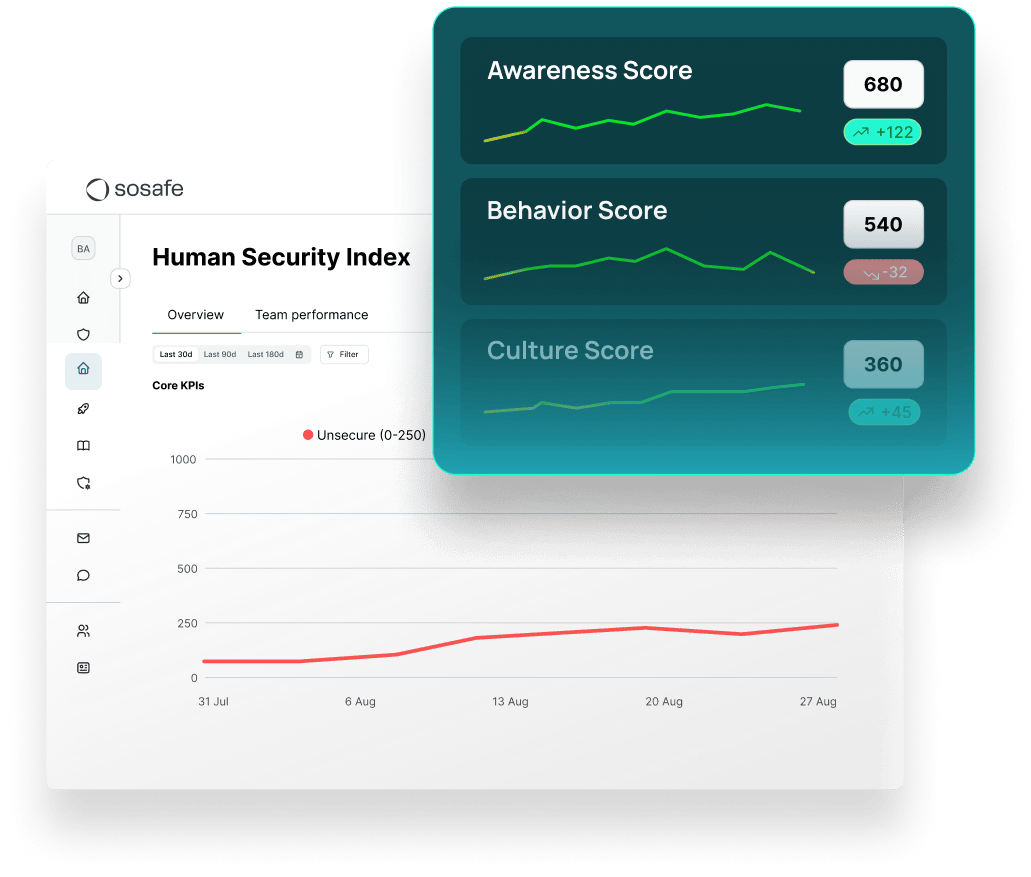
Under DORA, the management body is responsible for ICT risk. The Human Security Index turns simulations, reported threats and learning progress into one figure it can follow across the year.
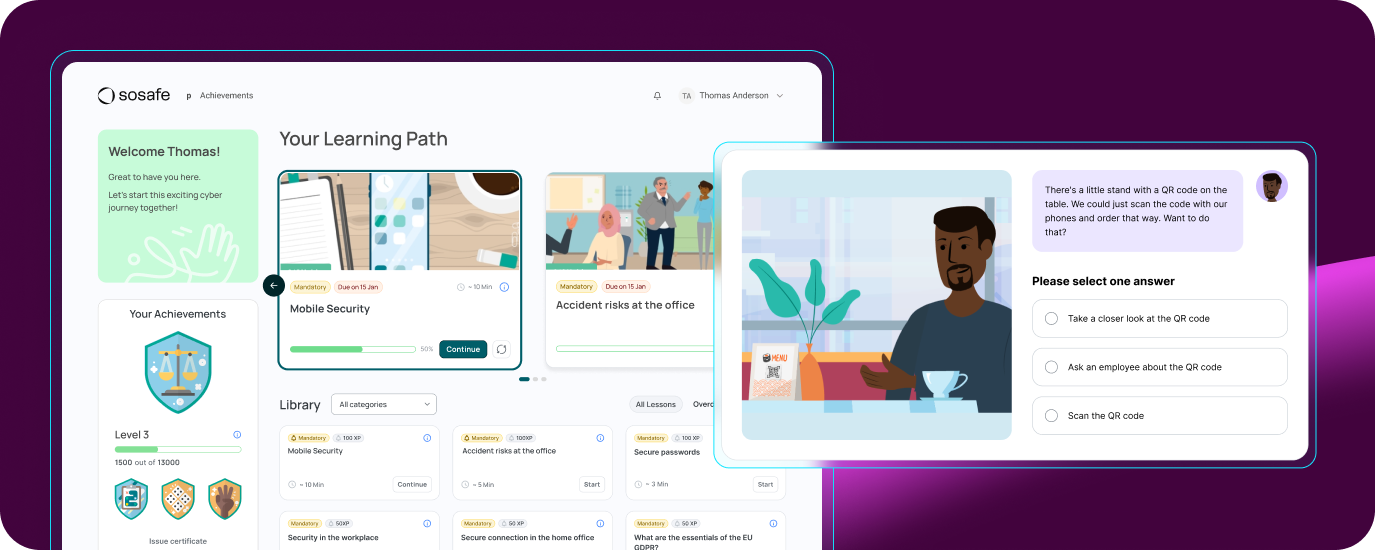
Training time that fits the year
When cyber training has to fit into a few hours a year, lessons of one to eight minutes spread it across the months. People build secure habits without leaving their desk or phone line for long.
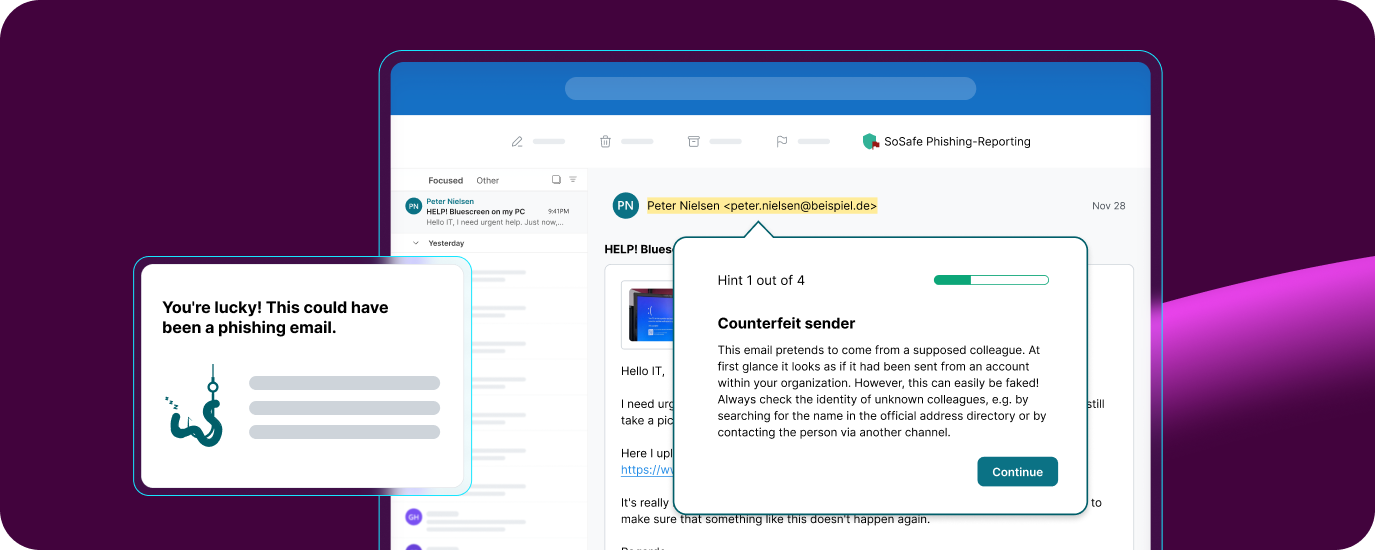
Simulations that learn from each response
A supplier reports new bank details, or a “colleague” needs a transfer before the cut-off. Our phishing simulations by email and SMS use lures like these, and by email each miss shapes what comes next.
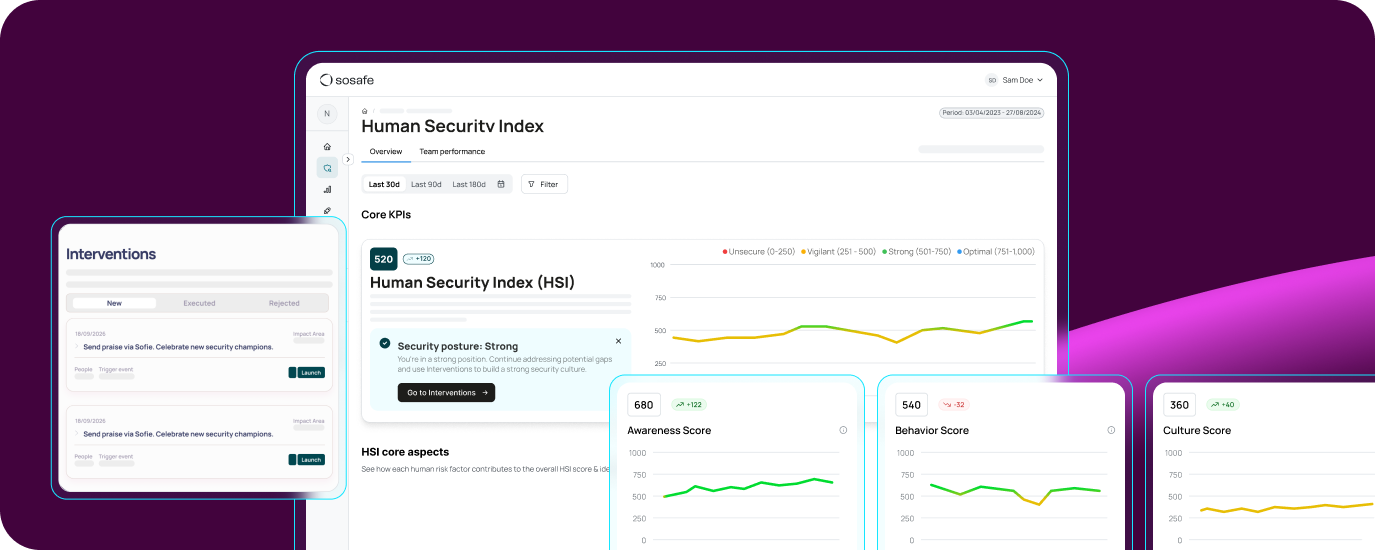
Figures the management body can follow
Under DORA, the management body is responsible for ICT risk. The Human Security Index turns simulations, reported threats and learning progress into one figure it can follow across the year.
THE CHALLENGE
Where attacks on financial firms usually begin

A payment request that looks routine
In ENISA’s analysis of incidents in the EU during 2025, credit institutions accounted for 61.9% of the incidents in the finance sector, and fraud and impersonation for 14.8% (ENISA Threat Landscape 2026, September 2026). Many attacks need nothing more than a believable request: an invoice with new account details, or an email from the “CEO” asking for a confidential transfer. CEO fraud works because it looks like ordinary payment work.

The caller who sounds right
A “customer” calls the contact centre to change a phone number shortly before a large transfer. Someone from “IT” asks the service desk to reset multi-factor authentication. The same ENISA report describes vishing campaigns in which attackers posed as IT staff to steal single sign-on credentials and MFA codes, and voice cloning makes such calls harder to question. Calling back on a known number often exposes them.

Ransomware and stolen customer data
Ransomware can take core banking, claims or payment systems offline for days, and stolen customer data leads to regulatory and reputational damage as well. The first step is often an email that someone opened on an ordinary working day.

Access through ICT providers
Cloud providers, software vendors and outsourcing partners often hold access to critical systems, and DORA treats ICT third-party risk in a chapter of its own. For cyber security in financial services, a stolen partner login is a particular risk because it looks legitimate. An employee who questions an unusual request can stop an attack early.
COMPLIANCE AND AUDIT-READINESS
What DORA expects from people, and how SoSafe supports it
For financial services cyber security, DORA makes ICT security awareness programmes and resilience training compulsory for all staff and senior management, and management body members must train regularly. SoSafe helps you demonstrate both with a programme aligned with DORA, ISO/IEC 27001 and GDPR.


WHO GETS TRAINED
Role-based training for cyber security in financial services
In branches and contact centres
Customer-facing staff hear the most convincing stories. A caller wants to change the phone number on someone else’s account, or a visitor pushes for an urgent withdrawal on a relative’s behalf. Lessons practise the checks that stop such requests, a core part of cyber security in the banking sector.
In payments, treasury and accounting
These teams release money, so attackers copy the documents they handle every day. It might be a changed IBAN on a supplier invoice or a confidential transfer requested just before the payment cut-off. Simulations use exactly these patterns, and your own approval rules can become a lesson.
In IT and at the service desk
Administrators go deeper into privileged access, handling credentials and how an incident is triaged. The service desk practises one question above all: is the person asking for a password or MFA reset really who they claim to be?
In the management body
Board members and senior managers get a shorter track on their role in cyber security. Lessons built from your own documents can add what DORA expects of the management body and how your ICT risk management framework works in practice.
Lessons in monthly doses
Lessons adapt to role, prior knowledge and risk profile. A claims handler and a network administrator see different content, a few minutes at a time, on a desktop or a phone and in 34+ languages.
From reported email to simulation
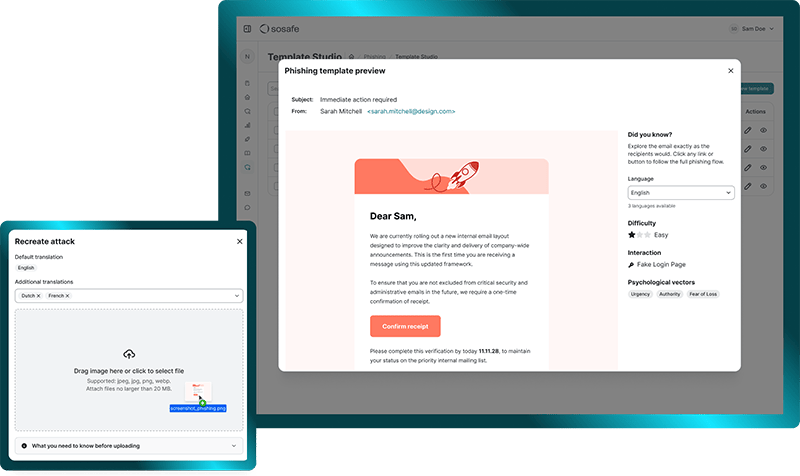
When a phishing email reaches your organisation, such as a fake payment reminder, the security team can rebuild it as a simulation within minutes and send it to the people it targeted.
A practice call in the browser
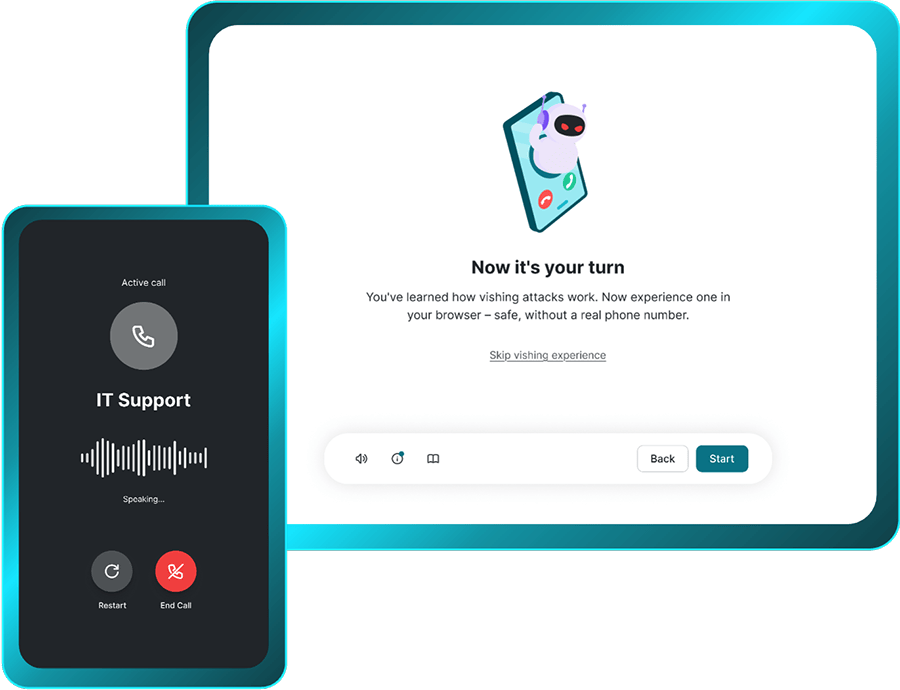
The Interactive Vishing Lesson ends with a realistic call in the browser, such as one from “IT support”. No phone numbers are needed. It builds the habit of checking but records no failure rate.
One click to report
The report button sits in the email client. One click sends a suspicious message to a single triage queue, where the security team reviews all reports together and decides what needs action.
Your own rules as lessons
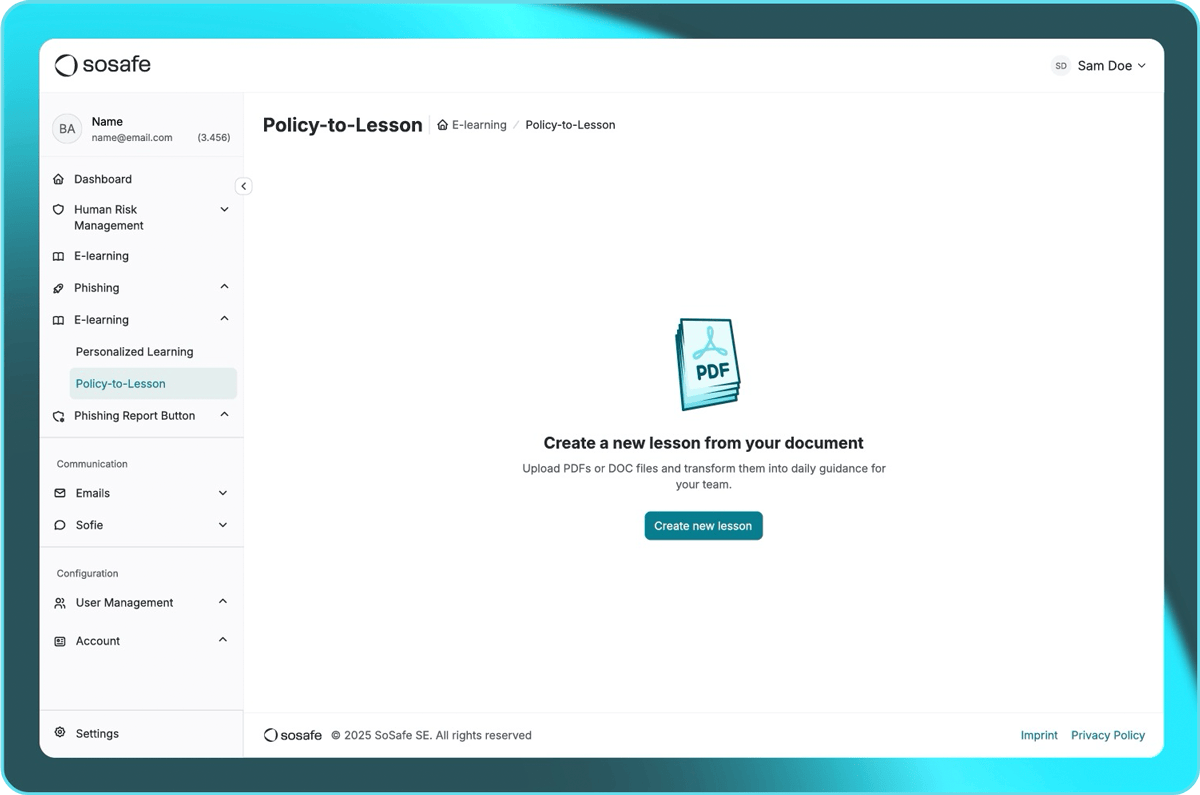
Upload a policy as a PDF, such as the callback rule for changed bank details. SoSafe turns it into an editable lesson draft, and your team checks it against your internal rules before publishing.
Evidence for audit and the board
Training and simulation reports help you prepare for audits. The Human Security Index shows internal audit and the management body how human risk develops across the organisation over time.

“Before SoSafe, quantifying our team’s cyber vulnerabilities was a challenge. The analytics from SoSafe have been a game-changer for us, enabling us to measure human risk, which has become an integral part of our security strategy. We’ve seen a remarkable 40% reduction in our simulation click rates and higher Behavior Score levels, clearly demonstrating the value of SoSafe’s training.”

Thorsten Seban
Information Security Officer at VR Bank Fulda, a bank with more than 360 employees
88%
knowledge retention after 12 months
90%
reduction in risky interactions
80%
reporting threats within 12 months
15 min
per week to run the full programme

Measurable impact for banks and insurers
In financial services cyber security, the management body needs evidence that behaviour changes, not only that training took place. SoSafe is trusted by more than 6,000 organisations worldwide, and the figures below come from aggregated data across their live programmes in all sectors.
Connected to the systems financial firms already run
Financial services cyber security works best inside the tools people already use. SoSafe connects with your identity provider, your service management and the collaboration tools your teams work in, so the programme runs within your existing environment.
Integrations
See all the integrations




Compliance
See all our certificationsGDPR Compliant
German Engineered
EU Hosted
Financial services cyber security FAQs
See SoSafe at work in financial services











 Reports
 Guides
 Blog
 Glossary
 Perks
 Customer stories
 Webinars
 Replays
 Podcast
 All events
 Signal Security Summit
 Danger Lab

 Careers
 News & press
 Contact
