FOR CENTRAL, REGIONAL AND LOCAL GOVERNMENT
Government and public sector cyber security for the people who keep public services running
- Security awareness training and phishing simulations for government organisations
- Short lessons for office, school and field staff, including those without a work email
- A programme aligned with NIS2 and ISO/IEC 27001, with training data hosted in the EU
How SoSafe helps
Solutions for your government cyber security risks
From the counter to the depot
A teacher, a road maintenance worker and a caseworker work for the same administration, yet only one of them sits at a desk all day. Public sector cyber security has to reach all three. They enrol without a work email, learn in one to eight minutes and use a platform with an independent accessibility audit and documentation.
Simulations that look like official business
Nobody in a citizen service centre leaves an application unanswered, and attackers know it. SoSafe phishing simulations imitate such messages, for example an application with an attachment, and adapt to how each person reacted before. Anyone who clicks sees a learning page on what gave the message away.
Evidence that behaviour changes
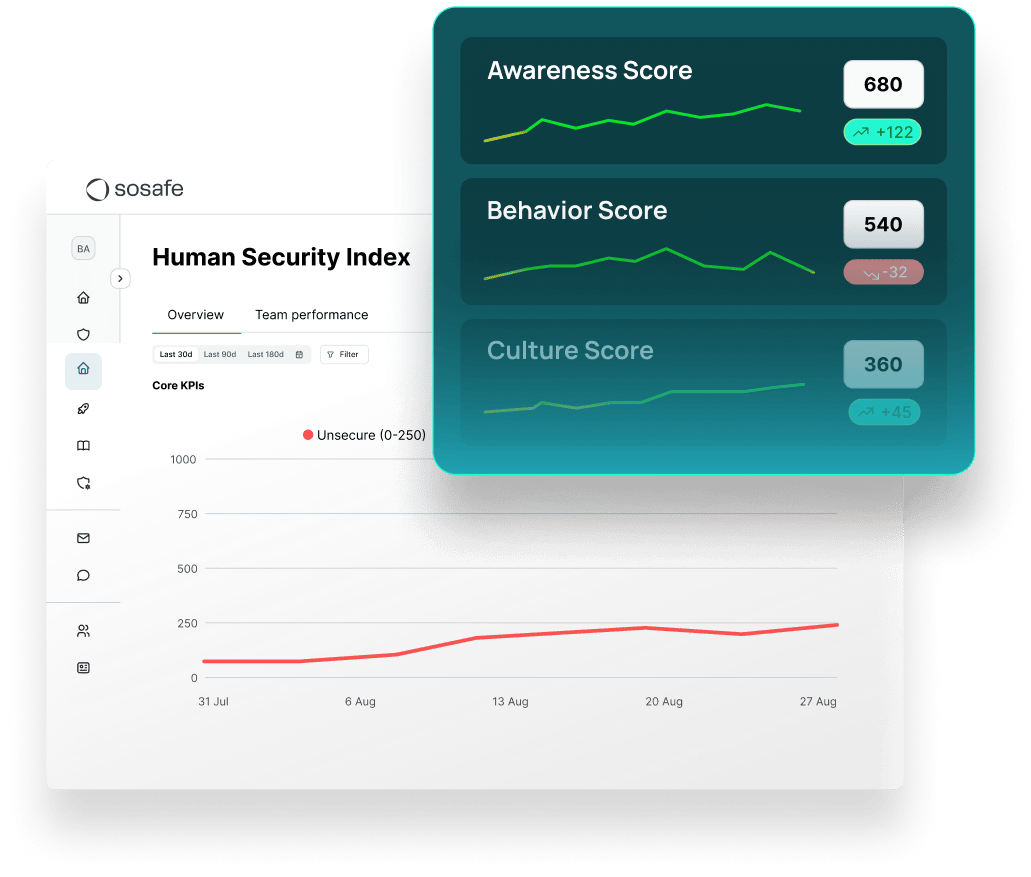
An attendance list shows who completed a course, not who would report a suspicious email tomorrow. For government cyber security, the Human Security Index combines simulation responses, reported threats and learning progress into one figure that leadership can follow over the year.
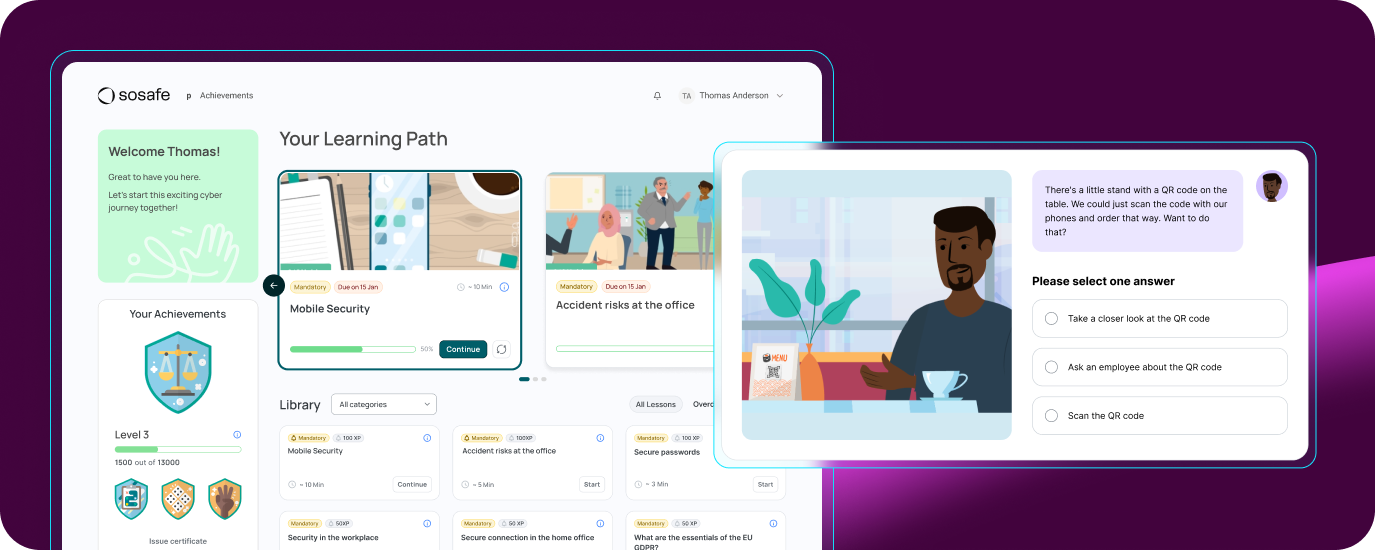
From the counter to the depot
A teacher, a road maintenance worker and a caseworker work for the same administration, yet only one of them sits at a desk all day. Public sector cyber security has to reach all three. They enrol without a work email, learn in one to eight minutes and use a platform with an independent accessibility audit and documentation.
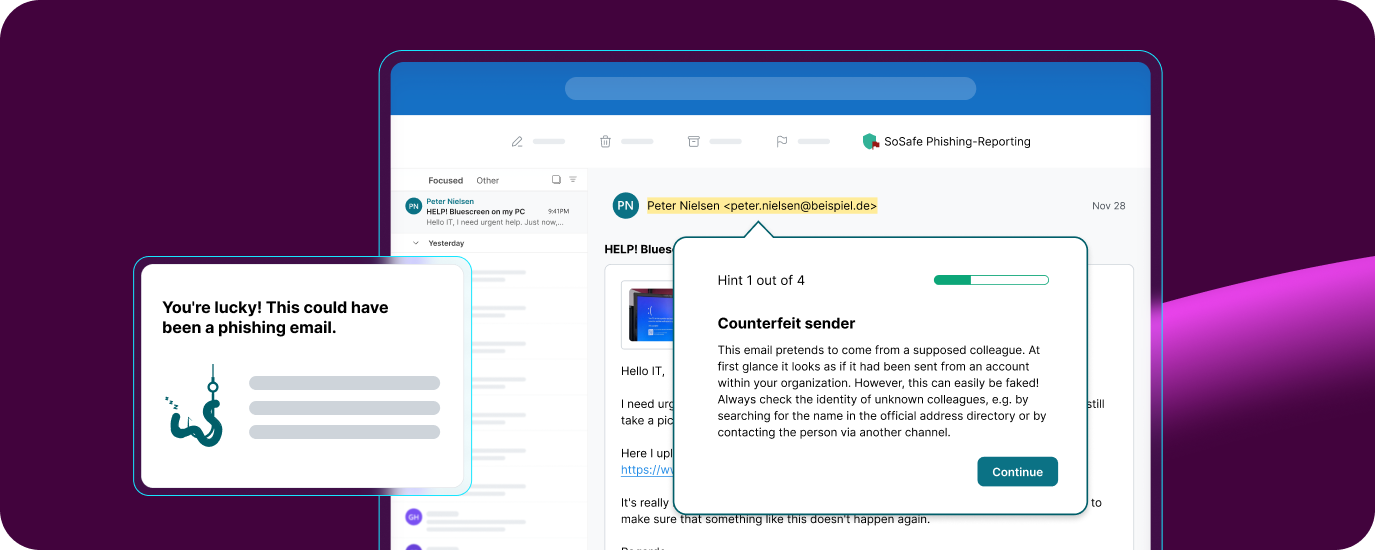
Simulations that look like official business
Nobody in a citizen service centre leaves an application unanswered, and attackers know it. SoSafe phishing simulations imitate such messages, for example an application with an attachment, and adapt to how each person reacted before. Anyone who clicks sees a learning page on what gave the message away.
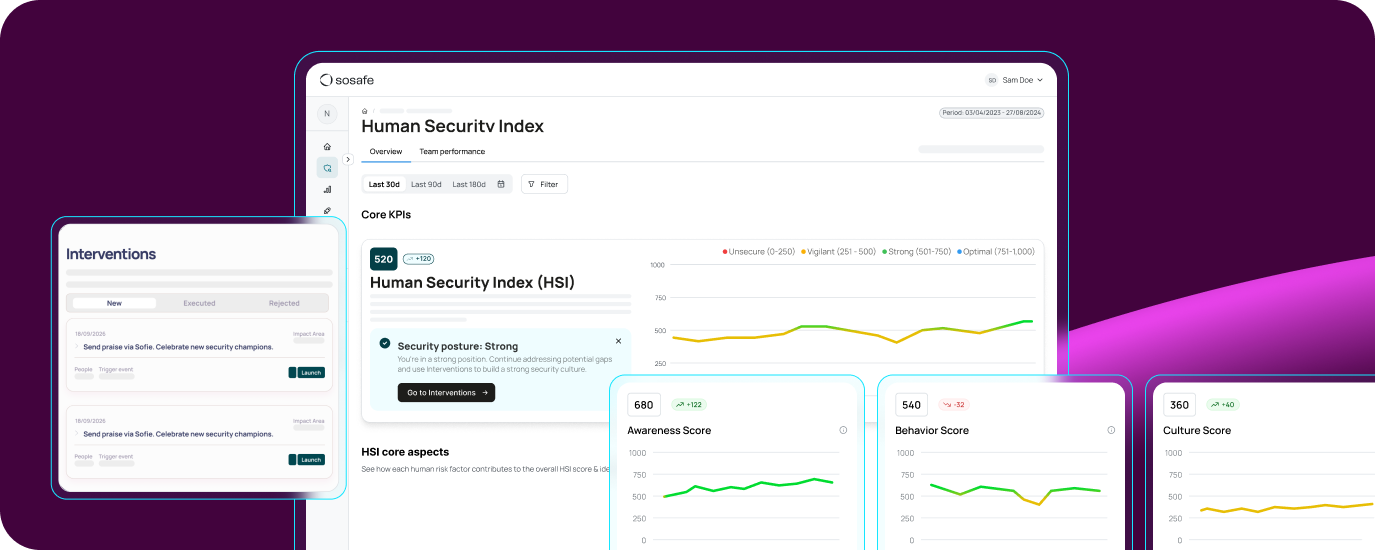
Evidence that behaviour changes
An attendance list shows who completed a course, not who would report a suspicious email tomorrow. For government cyber security, the Human Security Index combines simulation responses, reported threats and learning progress into one figure that leadership can follow over the year.
THE CHALLENGE
Where attacks on public administrations usually begin

Public services that depend on systems
Public administration remained the most targeted sector in the EU in 2025, with 31.8% of all events ENISA recorded. Most were ideology-driven DDoS attacks on websites and portals. Only a small share of incidents was financially motivated, but among those, ransomware claims accounted for 36% and mainly affected municipalities (ENISA Threat Landscape 2026, September 2026). Once systems are encrypted, services such as registrations or payments can stop until recovery is complete.

Messages that cannot wait
Opening messages from strangers is part of the job in a public administration. Residents send applications and objections with attachments, and other authorities send notices that need an answer by a deadline. Among the social engineering techniques ENISA recorded in 2025, phishing accounted for 77.8%. Messages written with AI tools now copy the tone of official correspondence with few mistakes.

Payments, tenders and a new bank account
Finance and procurement teams handle invoices, tender documents and changes to supplier details. A letter announcing a supplier’s new bank account works as a lure, and so does an urgent payment request in the name of a head of department. This is a common pattern of CEO fraud, and the money is usually gone before anyone calls back to check.

One supplier, many authorities
Many administrations share IT service providers. In 2025, ENISA reports, a ransomware attack on a Swedish IT supplier affected around 200 municipalities and regional authorities and disrupted systems used for HR reporting. Attackers also call staff as supposed helpdesk agents of such providers and ask for login codes. Vishing of this kind becomes more convincing with voice cloning.
COMPLIANCE AND AUDIT-READINESS
What NIS2 and ISO/IEC 27001 expect from public administrations
NIS2 covers central government bodies and, after a risk assessment, regional ones; national law can add local authorities. Their leadership has to follow training, and staff training is one of the required measures. SoSafe helps you demonstrate behaviour change, aligned with NIS2 and ISO/IEC 27001.


WHO GETS TRAINED
Public sector cyber security training for every department
At the counter and in case handling
Staff in citizen services, registration, permits and social services work with personal data and open attachments from residents every day. Simulations reflect that work. The lessons practise a short check before a file is opened or data is passed on, even when someone is waiting at the counter.
Accounts payable, procurement and HR
An email asks HR to pay this month’s salary into a new account, and it appears to come from a colleague. Accounts payable and procurement receive similar requests in a supplier’s name. Before anything is paid or changed, these teams learn to check back through a number or contact they already know.
Away from the desk
Many teachers, depot crews and field officers have never had a work email address, which doesn’t stop them from enrolling. A lesson runs on a phone or on a shared tablet in the staff room. Smishing simulations reach them by text message, the channel they actually use during the day. Printable materials cover teams who rarely use a screen at work.
Leadership, elected officials and IT
Where NIS2 applies, members of the management body have to follow training. Senior officials get a shorter track built around their responsibility for cyber risk, and elected representatives who use the administration’s systems can take part as well. Public sector IT security teams with privileged access go deeper.
Lessons between two appointments
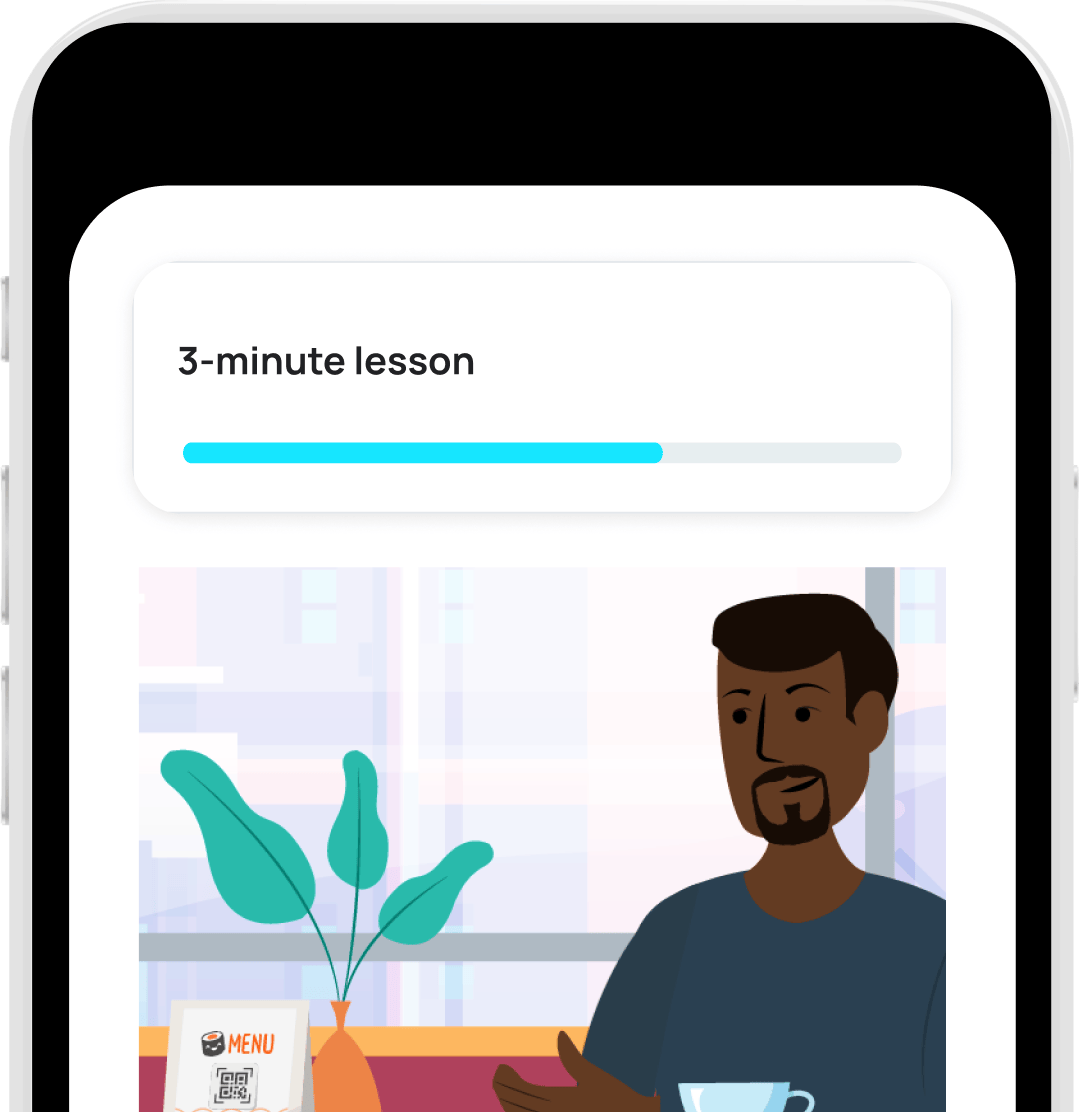
Lessons adapt to role, prior knowledge and risk profile. A caseworker and a teacher see different content, one to eight minutes at a time, in 34+ languages.
A real attack, rebuilt as practice
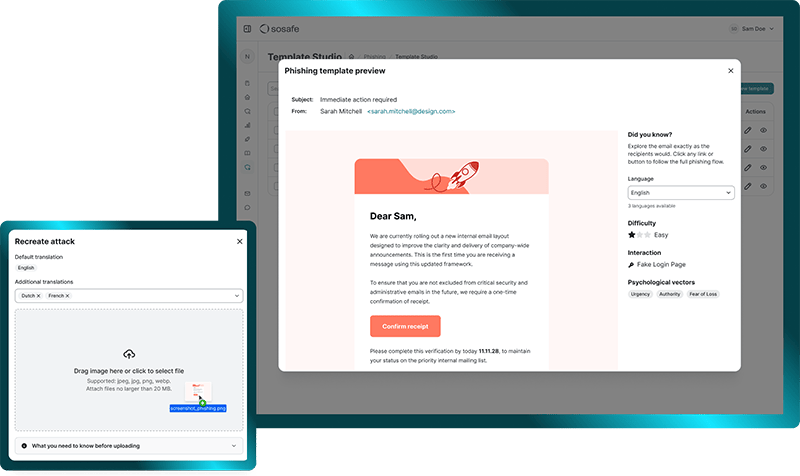
When a phishing email reaches your administration, for example a fake notice from another authority, the security team can rebuild it as a simulation in a few minutes and send it to the people it targeted.
A practice call without phone numbers
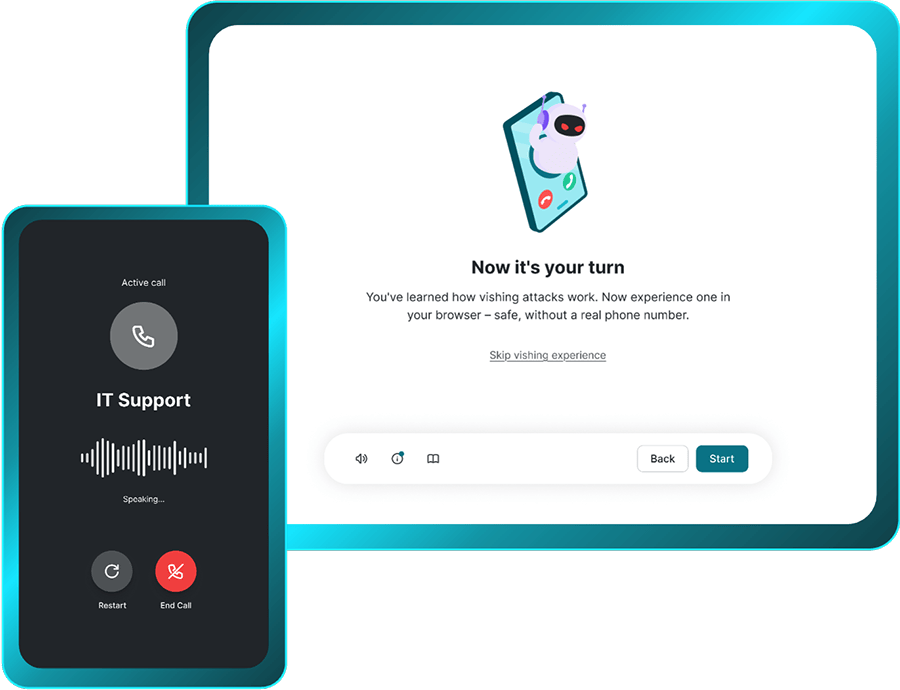
The Interactive Vishing Lesson ends with a realistic call in the browser, such as a supposed helpdesk agent from your IT provider who asks for a login code. No phone numbers are needed. It builds the habit of checking but records no failure rate.
Your service rules as lessons
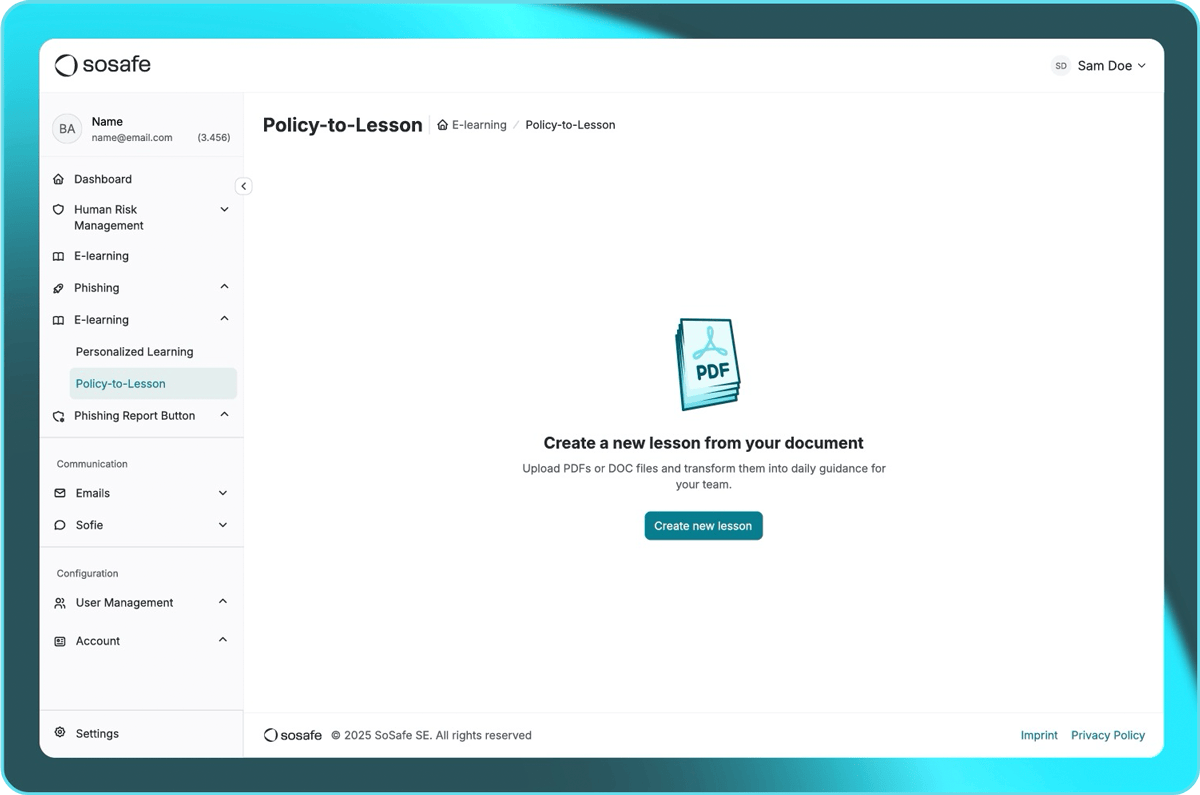
Upload a rule as a PDF, such as your guidance on AI tools and citizens’ data. Policy-to-Lesson creates an editable draft that you review before publishing, in the languages enabled for your account.
One button for suspicious emails
Staff flag a suspicious message with one button in their email client. All reports land in a single triage queue, so even a small security team sees them in one place and decides what needs action.
Reports for audits and leadership
An ISO/IEC 27001 report takes one click, and training and simulation results can be exported for audits and leadership reviews.

“In a crisis, no technology will help you – only resilient colleagues who keep a cool head even in such a stressful situation, apply what they have learned, and do their best to get the company back on track. SoSafe is the solution provider that helps us to get there quickly and to engage our employees in an appealing way.”

Jens Feistel
CISO at DEW21, a municipally owned energy supplier in Germany
88%
knowledge retention after 12 months
90%
reduction in risky interactions
80%
reporting threats within 12 months
15 min
per week to run the full programme

Measurable impact for public administrations
In government cyber security, leadership and auditors look for evidence that behaviour changes, not only attendance lists. SoSafe is trusted by more than 6,000 organisations worldwide, and the figures below come from aggregated data across their live programmes in all sectors.
Connected to the systems public administrations already run
Cybersecurity for government agencies has to fit into an IT landscape that a small team or an external provider often runs. SoSafe connects with your identity provider, your HR system for user provisioning and the collaboration tools your staff use. If you run your own learning platform, lessons can be exported as SCORM packages.
Integrations
See all the integrations




Compliance
See all our certificationsGDPR Compliant
German Engineered
EU Hosted
Government and public sector cyber security FAQs
See SoSafe at work in public administration










 Reports
 Guides
 Blog
 Glossary
 Perks
 Customer stories
 Webinars
 Replays
 Podcast
 All events
 Signal Security Summit
 Danger Lab

 Careers
 News & press
 Contact
