FOR LOGISTICS, RAIL, MARITIME AND AVIATION
Transportation cyber security for drivers, crews, depots and dispatch offices
- Security awareness training and phishing simulations for transport and logistics companies
- Drivers, crews and warehouse teams learn on their own phone, without a company email address
- Reporting aligned with NIS2, ISO/IEC 27001 and GDPR, for office and frontline staff alike
How SoSafe helps
Transportation cyber security built around shifts and routes
No company inbox needed
Plenty of drivers, dock workers and cabin crew never get a company email address. That is no obstacle: they sign up without one and learn on their phone or the depot terminal, a few minutes at a time.
Simulations taken from everyday freight work
Use realistic email and SMS scenarios to practise recognising social engineering. Behaviour-based phishing simulations by email adjust difficulty and cadence to individual performance.
Evidence for the board, regulators and customers
Reports aligned with NIS2, ISO/IEC 27001 and GDPR track transport cyber security over the year. Leadership follows one clear figure, and the security team sees which teams need attention next.
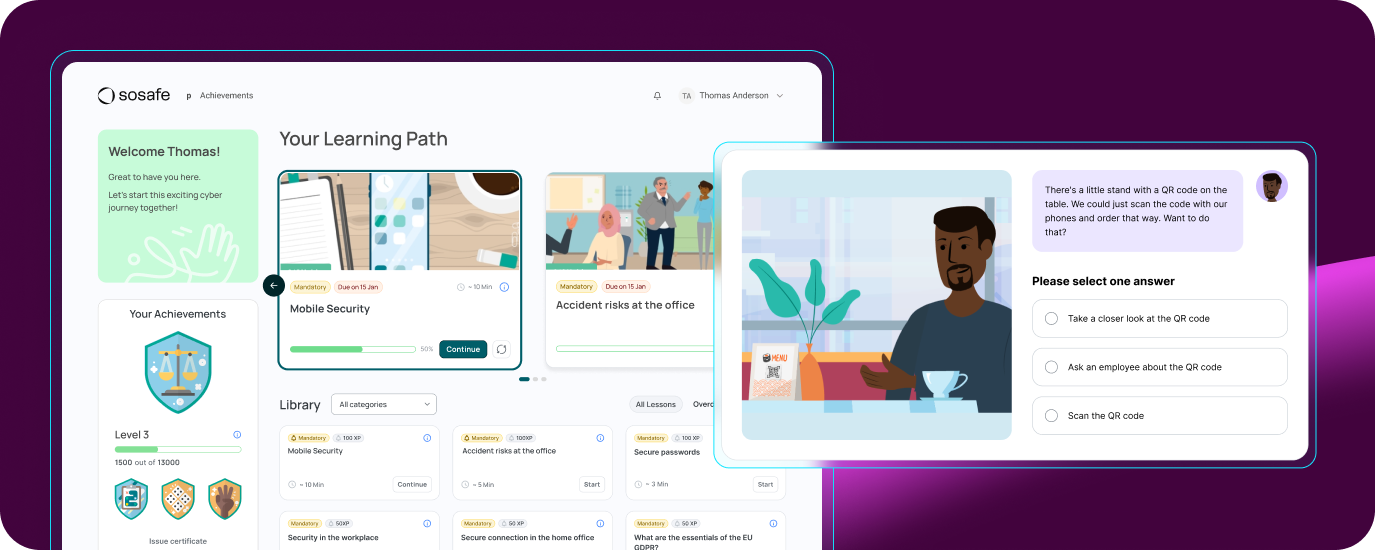
No company inbox needed
Plenty of drivers, dock workers and cabin crew never get a company email address. That is no obstacle: they sign up without one and learn on their phone or the depot terminal, a few minutes at a time.
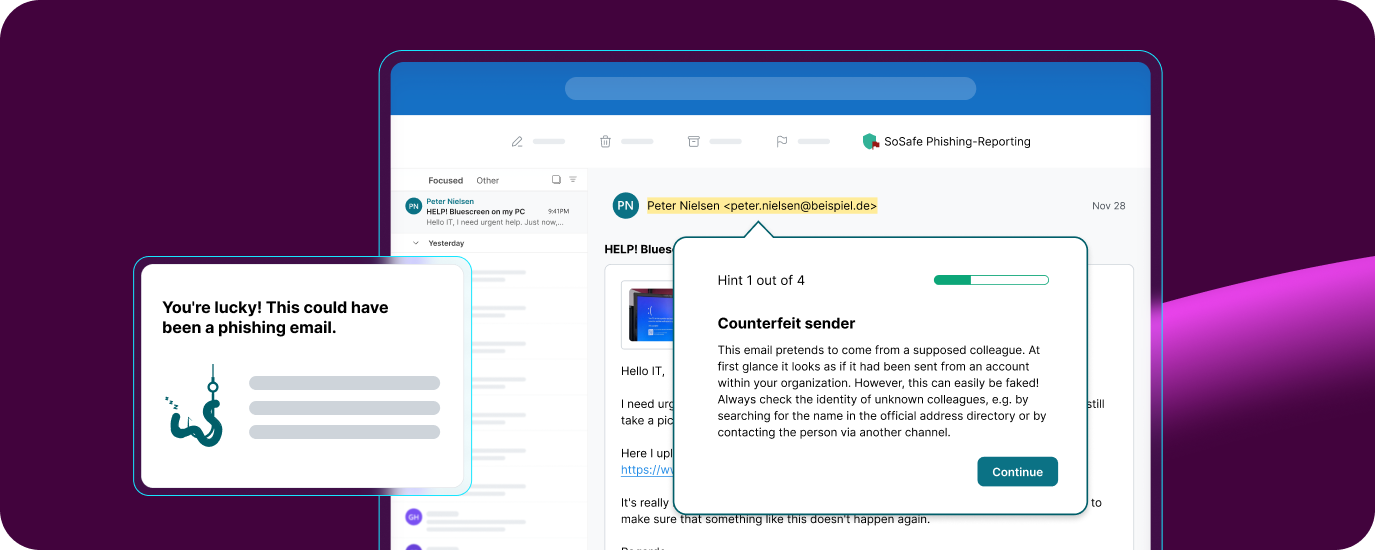
Simulations taken from everyday freight work
Use realistic email and SMS scenarios to practise recognising social engineering. Behaviour-based phishing simulations by email adjust difficulty and cadence to individual performance.
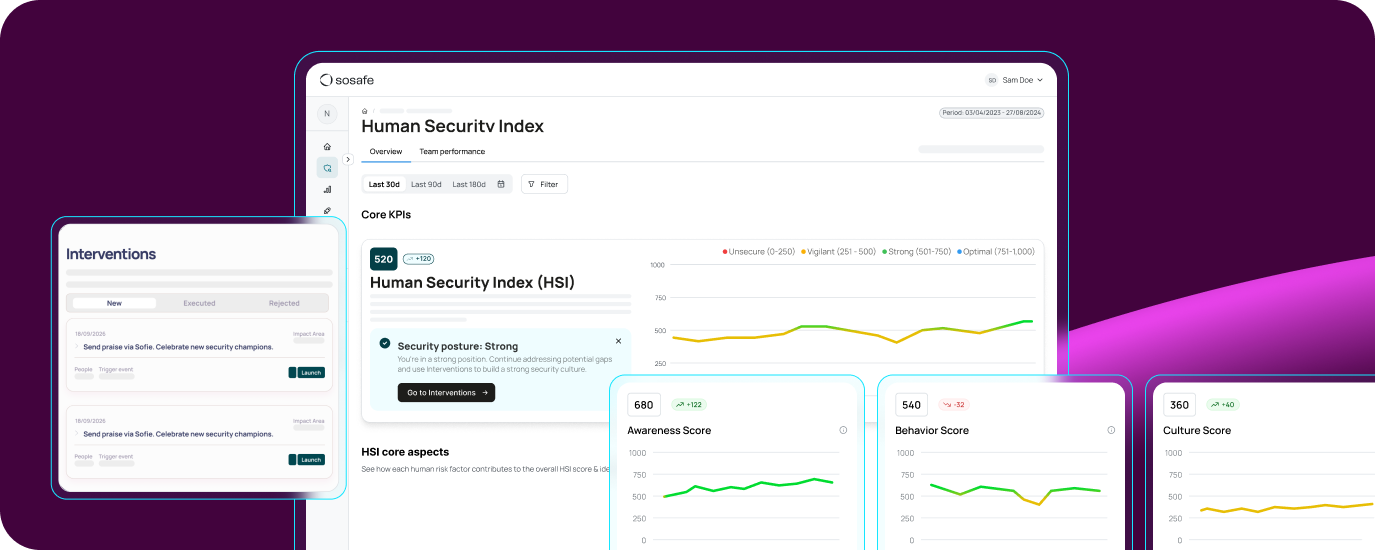
Evidence for the board, regulators and customers
Reports aligned with NIS2, ISO/IEC 27001 and GDPR track transport cyber security over the year. Leadership follows one clear figure, and the security team sees which teams need attention next.
WHERE THE RISK STARTS
Four ways attackers reach transport and logistics teams

Ransomware that halts the flow of goods and people
Booking, dispatch or terminal systems go offline. Lorries queue at the gate, containers wait on the quay and check-in desks switch to manual processing. Delivery windows and timetables keep running while recovery takes weeks, and in many cases the attack began with a message in an ordinary inbox.

Payment fraud built on freight documents
Shortly before the next invoice, a haulier writes that his company has switched banks. Or a new subcontractor takes a load through a freight exchange, and the goods vanish somewhere between pickup and delivery. Requests like these look just like the paperwork dispatch and finance handle all day.

When “dispatch” calls
On the road, a driver gets a call asking for the login code of the fleet app. The service desk takes a call from a pilot who is locked out of the crew portal. Voice cloning makes a caller sound familiar. In incident response data published in 2025, 23% of social engineering cases involved callback or voice-based techniques (Unit 42, July 2025).

Access through partners and connected systems
Ground handlers, port community systems, maintenance contractors and telematics providers hold credentials into your environment. For aviation, maritime and rail cyber security, a stolen partner login looks legitimate and can lead towards operational systems. An employee who checks an unusual request with a known contact often stops it early.
COMPLIANCE AND AUDIT-READINESS
Audit-ready evidence for cyber security in logistics and transport
NIS2 covers airlines, railways, ports and courier services and makes training part of risk management, management included. SoSafe turns behaviour into evidence, with reports aligned with NIS2, ISO/IEC 27001 and GDPR that document progress in transportation cyber security.


WHO GETS TRAINED
Transportation cyber security training for the roles in your operation
Behind the wheel and on board
Nobody on the road needs a company email address to take part. Lessons open on a personal phone and are short enough for a wait at the ramp, in 34+ languages if the team is mixed. Ready-made lessons on mobile security and vishing fit their day; your own lessons add rules such as how dispatch confirms a route change.
In the warehouse and at the terminal
Several people often share one terminal per shift, and peak season brings new faces fast. With a registration code, seasonal and temporary staff get their own account without a company email and learn on that terminal or a phone. You choose how they are identified; certificates require a name.
Dispatch, customer service and finance
Bookings, customs paperwork, invoices and payment changes pass through these teams every day, and fraudsters copy exactly these documents. Ready-made training covers payment and CEO fraud; your own lessons and simulations add how your team checks new bank details.
IT, operational technology and leadership
IT staff train on privileged accounts and access management. Leadership teams get content on the responsibilities NIS2 assigns to management bodies and on incident response. Your own reporting procedure can become a lesson as well, so everyone knows who reports what, and when.
Lessons that fit a loading slot
Lessons adapt to role, prior knowledge and risk profile. A courier and a network administrator see different content, each in a few minutes on a phone or a desktop and in 34+ languages.

Real attacks, rebuilt as training
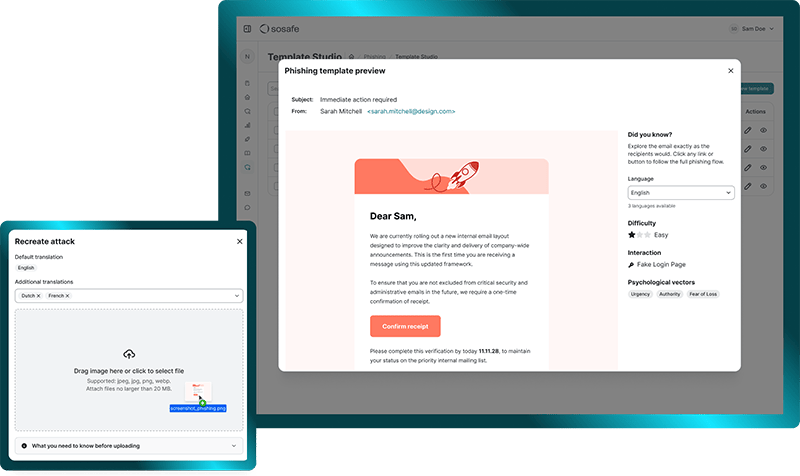
When a phishing email reaches your organisation, the security team can turn it into a simulation within minutes, for example a fake shipping notice, and send it to the teams it targeted.
A practice call inside the lesson
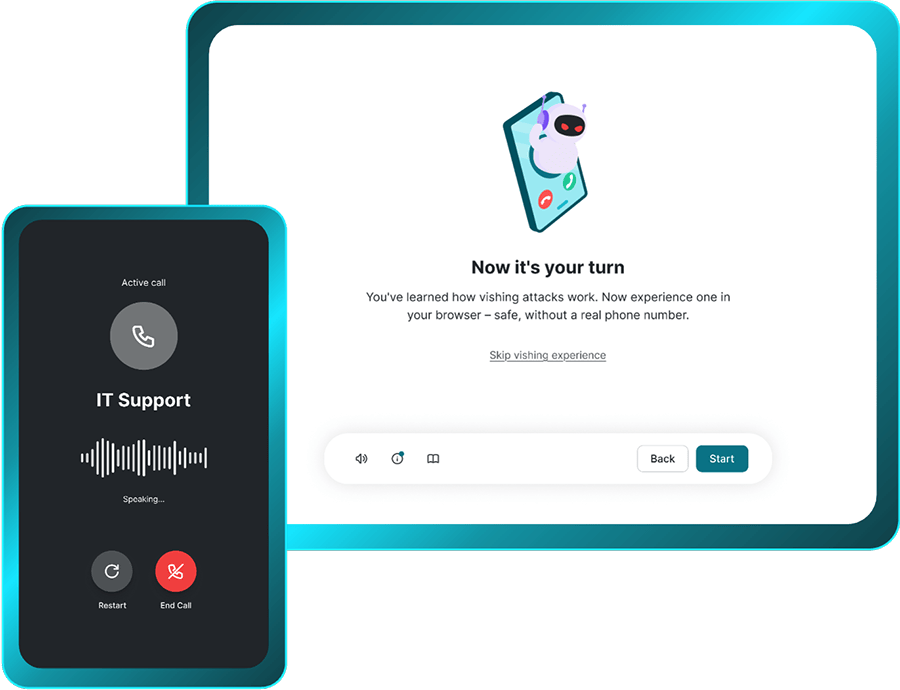
The Interactive Vishing Lesson includes a realistic call in the browser, with no phone numbers to manage. People practise checking a caller; unlike simulations, it records no failure rate.
Reporting in one click
A single click moves a suspicious email into the triage queue. The security team sees all reports in one place and decides which ones need action.
Lessons built on your own rules
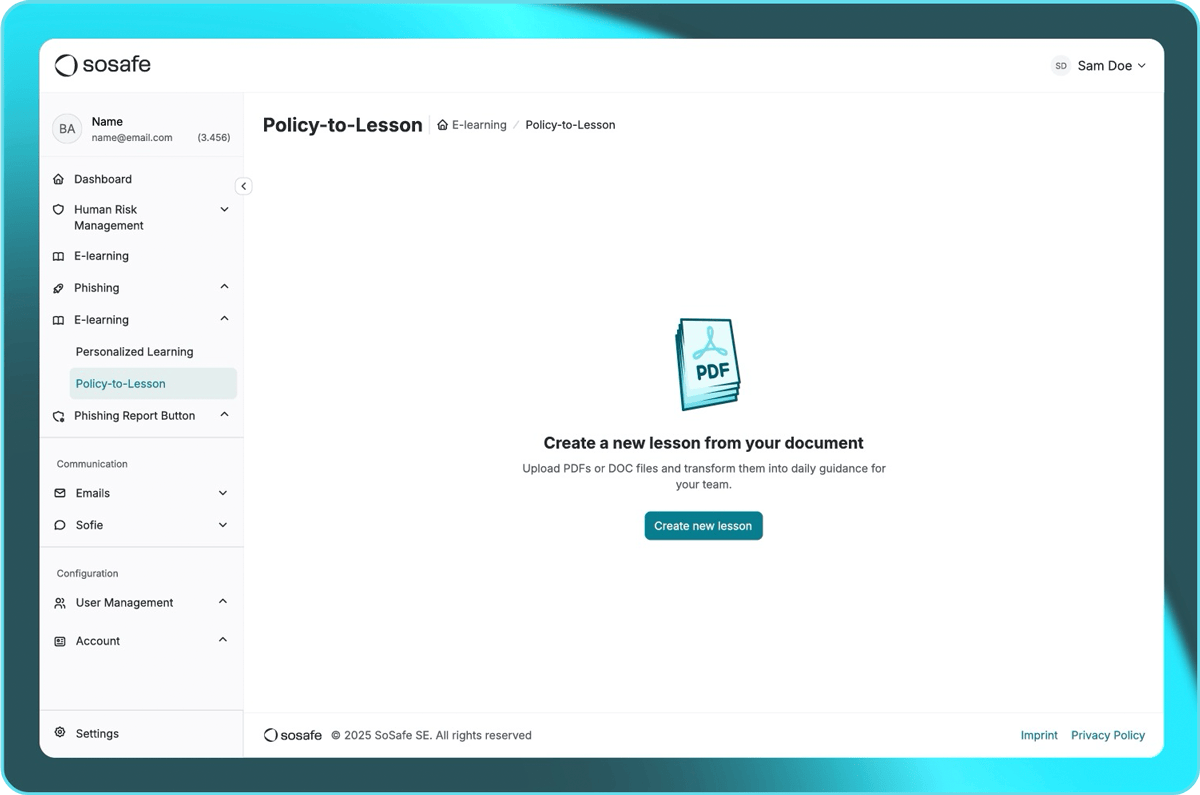
Upload a policy as a PDF, say the rule for vetting a new subcontractor or for USB sticks on board. SoSafe turns it into an editable lesson draft that you review and refine before publishing.
Reports for audits and management
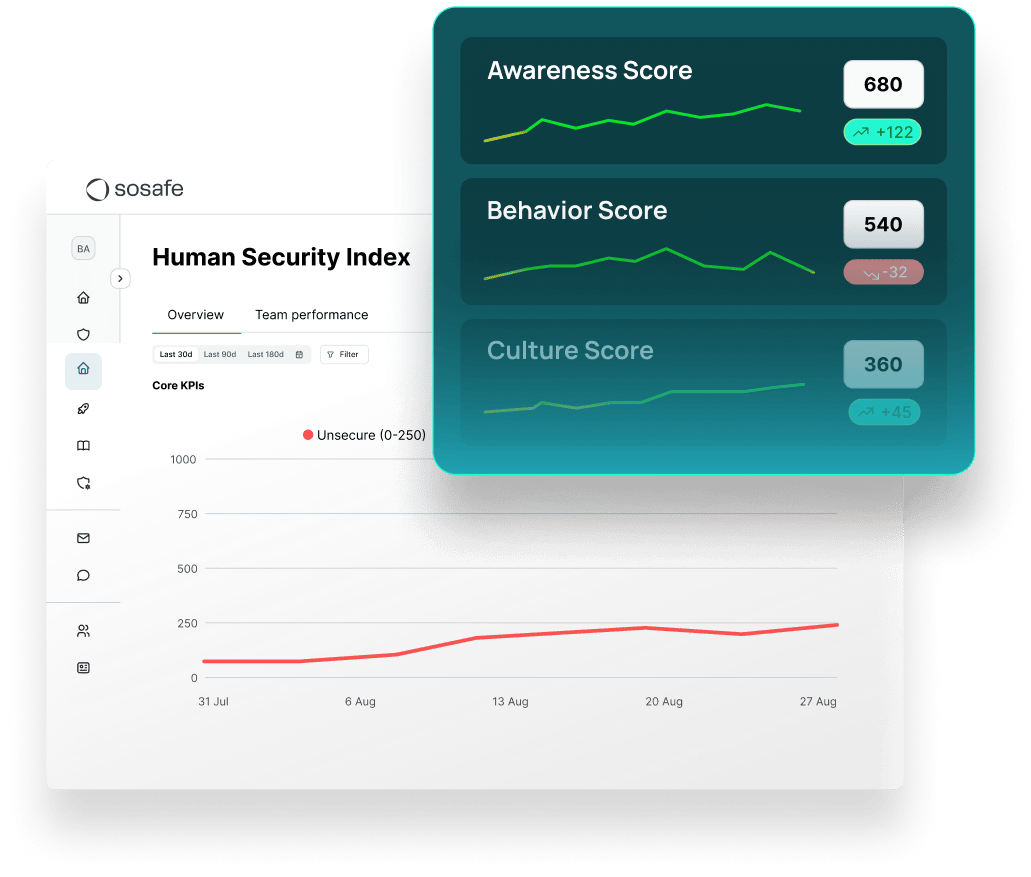
A ready-made export supports ISO/IEC 27001 audits. For NIS2 and GDPR, exported training and simulation results feed the evidence you compile. The Human Security Index tracks behaviour over time.

“As a logistics company, cyber security and supply chain attacks are very hot topics for us, and the attack methods are always evolving. We used to train our employees very sporadically, but that didn’t give us the results we wanted. Thanks to SoSafe’s great training and extremely high-quality phishing simulations tailored to our exact needs, our employees are always up to date when it comes to cyber security.”

Denis Karbstein
IT Project Manager at LGI Logistics Group, a contract logistics provider with more than 45 international locations
88%
knowledge retention after 12 months
90%
reduction in risky interactions
80%
reporting threats within 12 months
15 min
per week to run the full programme

Secure habits, in numbers
SoSafe is trusted by more than 6,000 organisations worldwide. The figures below come from aggregated data across their live programmes in all sectors.
Connected to your identity, ticketing and chat tools
Transport cyber security has to work with the systems already running across your sites. SoSafe connects with the identity provider that manages access, the ticketing system your IT team works in and the collaboration tools your teams already use.
Integrations
See all the integrations




Compliance
See all our certificationsGDPR Compliant
German Engineered
EU Hosted
Transportation cyber security FAQs
See SoSafe at work in transport and logistics












 Reports
 Guides
 Blog
 Glossary
 Perks
 Customer stories
 Webinars
 Replays
 Podcast
 All events
 Signal Security Summit
 Danger Lab

 Careers
 News & press
 Contact
