FOR HOSPITALS, CLINICS AND LIFE SCIENCES
Cyber security for healthcare that fits the working day
- Lessons of one to eight minutes, built around ward rounds, handovers and admin work
- Phishing, smishing and vishing simulations that mirror the attacks reaching hospitals
- Audit-ready reporting aligned to NIS2, GDPR, ISO/IEC 27001, the CER Directive and HDS
How SoSafe helps
Solutions for your healthcare cyber security risks
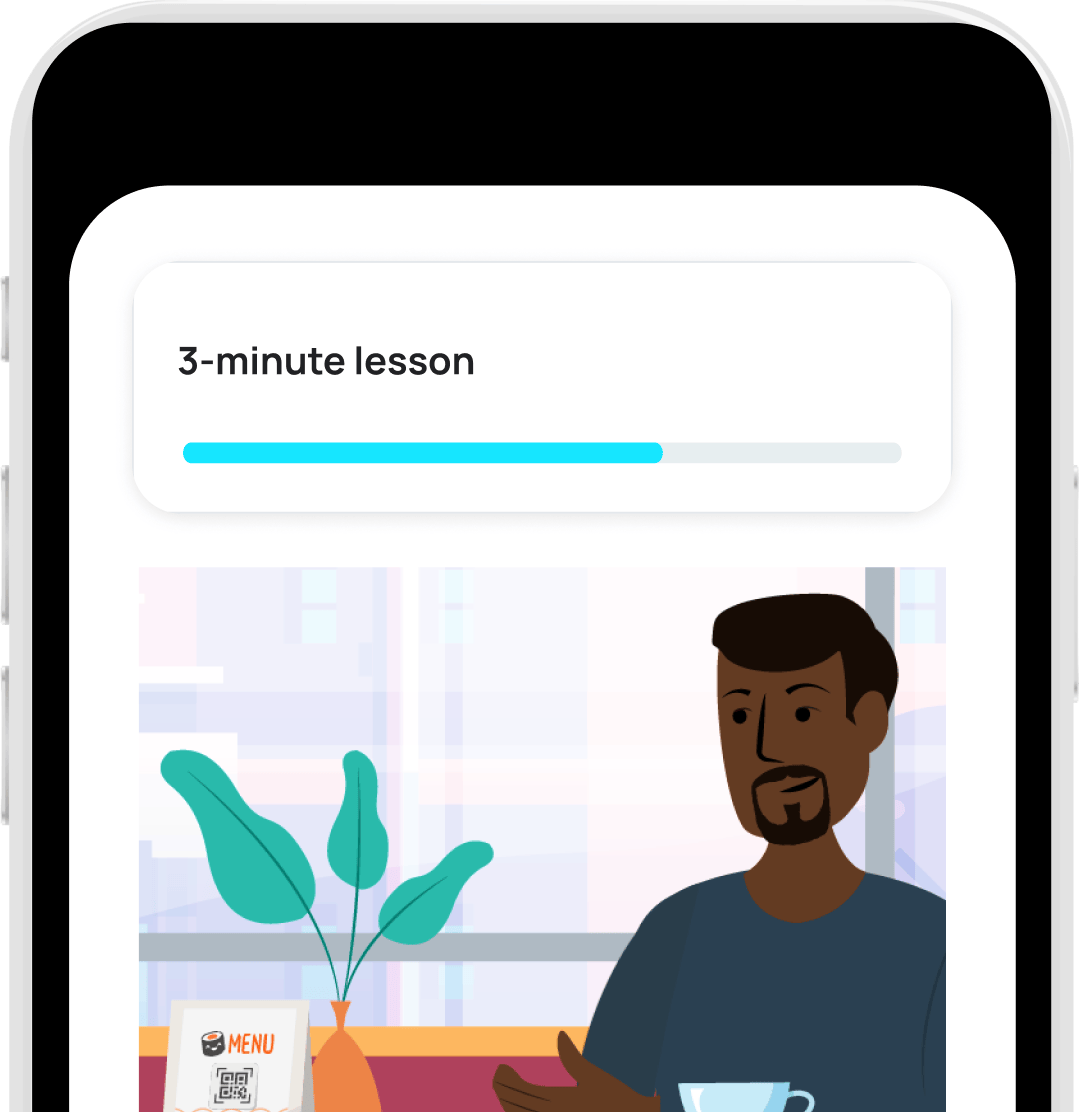
Lessons short enough to finish before handover
One to eight minutes, on a ward terminal, between two jobs. What matters is the habit: at three in the morning, on a fourth night shift, people still look at who sent it.
Simulations on the channels attackers actually use
Email, SMS and phone. People meet the same tricks in training that reach them at work, and whatever someone misses in one round decides what they are sent in the next.
Audit reports and analytics that show real change
Behaviour signals become reports that map to NIS2, GDPR and ISO/IEC 27001. The board sees one trackable metric, the security team sees where risk actually sits across departments.
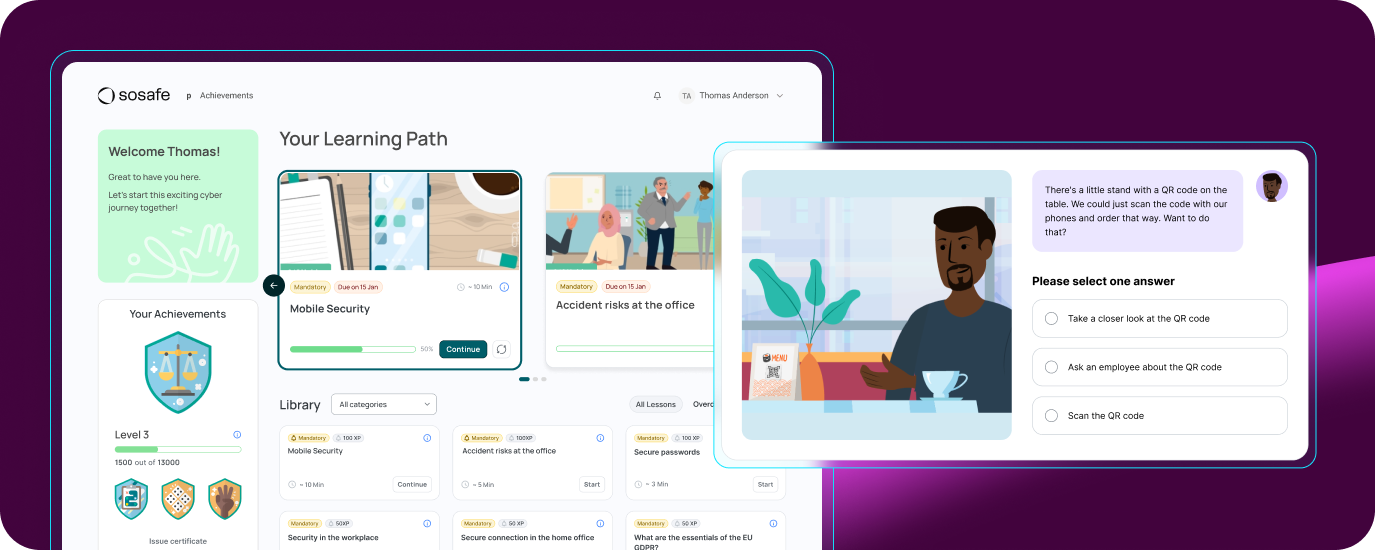
Lessons short enough to finish before handover
One to eight minutes, on a ward terminal, between two jobs. What matters is the habit: at three in the morning, on a fourth night shift, people still look at who sent it.
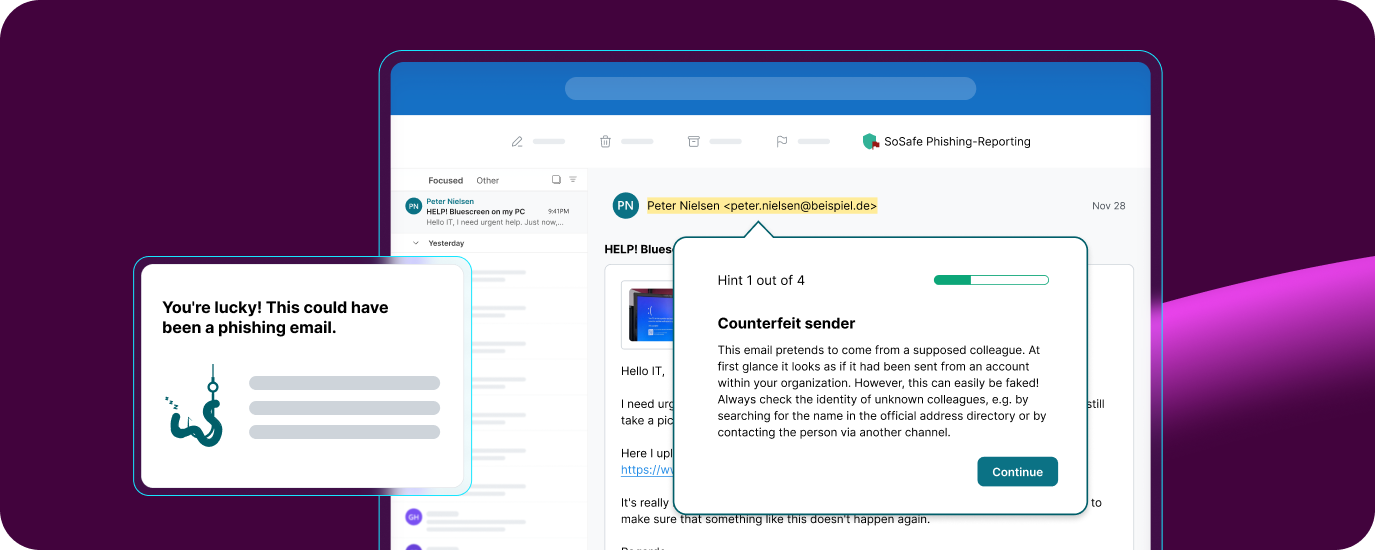
Simulations on the channels attackers actually use
Email, SMS and phone. People meet the same tricks in training that reach them at work, and whatever someone misses in one round decides what they are sent in the next.
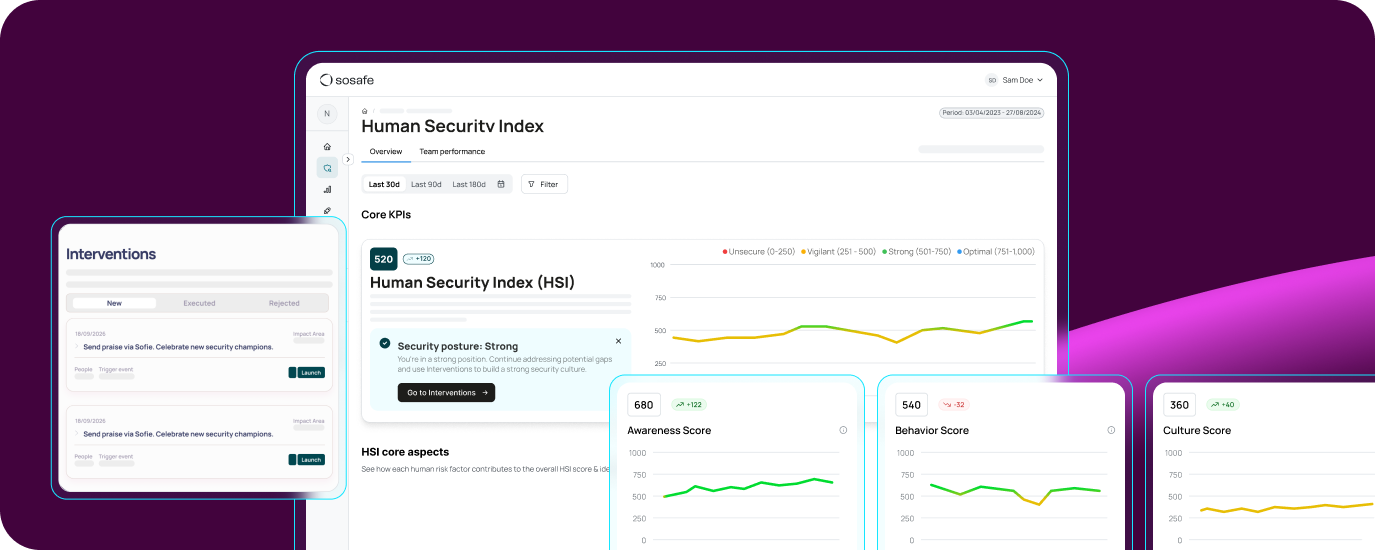
Audit reports and analytics that show real change
Behaviour signals become reports that map to NIS2, GDPR and ISO/IEC 27001. The board sees one trackable metric, the security team sees where risk actually sits across departments.
THE RISKS BEHIND THE PROGRAMME
What healthcare teams are up against

Ransomware moving into the ward
Ransomware takes out scheduling, and within an hour the ward is running on printed lists and phone calls. Imaging backs up. Non-urgent surgery gets moved by weeks, long after the servers are clean.

Phishing that knows the rota
A fake lab result. A rota change from someone in HR you have never met. An invoice chaser from a supplier you do use. All of it lands mid-shift, on a terminal three people share, and it looks routine.

The call from IT support
A caller needs something now and says he is from the helpdesk. Cloning a voice off a recording costs almost nothing. Around a quarter of social engineering breaches involve phone or social channels.

The way in through a supplier
Imaging equipment, service contractors, research partners: each one holds a route into the network. Credentials stolen from a maintenance firm arrive as a valid login, and a person notices before a tool does.
Compliance and audit-readiness
Built for European Healthcare Risk and Compliance
Healthcare cyber security is judged on evidence, not intent. SoSafe connects employee behaviour, threat signals and audit records to support your obligations under NIS2, GDPR, the CER Directive and ISO/IEC 27001, alongside France’s HDS framework.


HEALTHCARE CYBER SECURITY BY ROLE
Role-based protection for your entire healthcare workforce
Clinical and frontline staff
Doctors, nurses and care staff train on shared terminals or personal devices without needing a company email address. Scenarios use the situations they actually meet: a suspicious login alert during a night shift, or a message that looks like it came from the ward system.
Administrative and office teams
Office-based teams handle referrals, invoices, payroll and supplier correspondence, which is exactly what attackers imitate. Training runs on those same documents. A payment request with new bank details. An MFA prompt by SMS. A delivery notice sitting next to twenty real ones.
Security, IT and the board
Administrators go deep on privileged access and incident triage. Managers and executives get a shorter version, pitched at what a board or an auditor asks about first, which is rarely the technical detail and almost always the reporting deadline and who signs it off.
Regulated production teams
Teams in pharmaceutical manufacturing and pharmacovigilance train against the risks specific to regulated production: data integrity, GMP documentation and the operational technology sitting between the plant floor and the corporate network, where one unpatched terminal holds up a batch.
Personalised lessons
Lessons adjust to role, prior knowledge and risk profile, so a ward nurse and a systems administrator never sit through the same content.
Live threat simulations
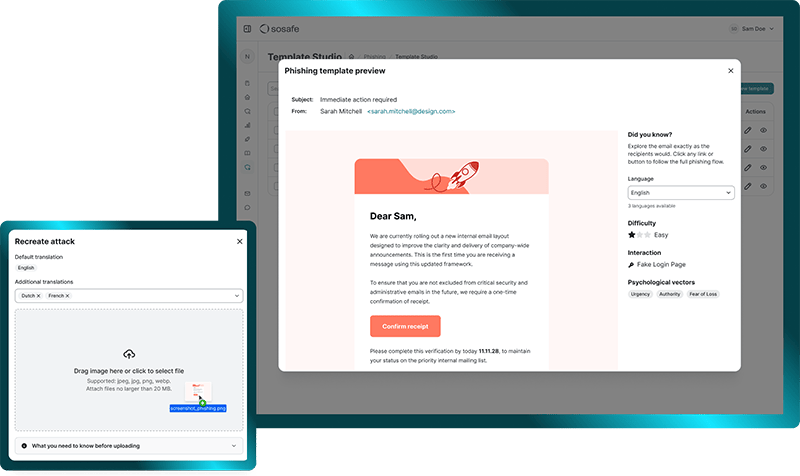
A phishing mail caught in your own environment can be rebuilt as a training simulation in three to four minutes and sent to the teams it targeted.
Email, SMS and voice
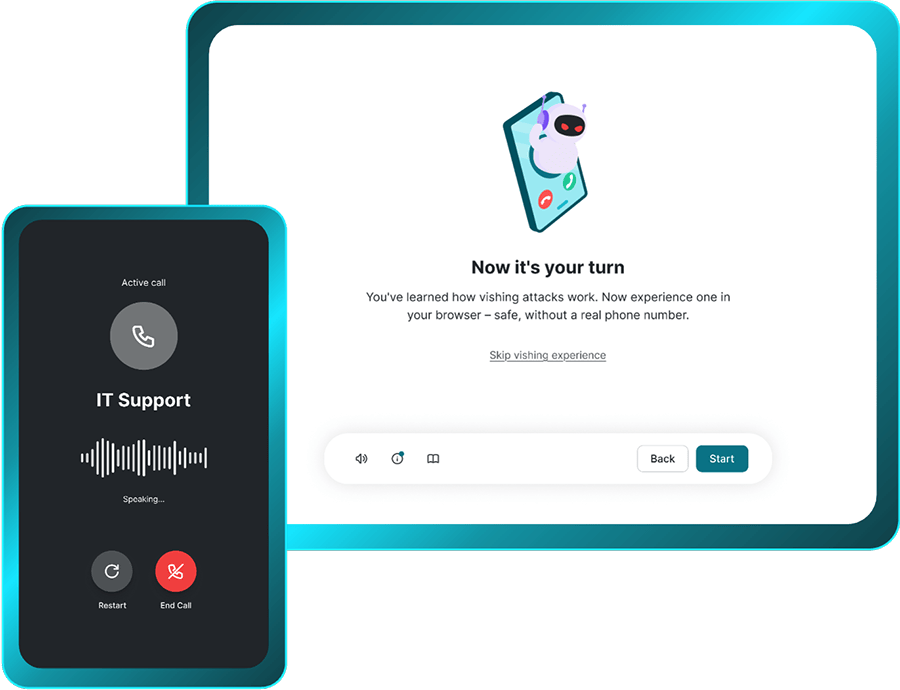
Vishing, smishing and phishing simulations run from one dashboard, so the channels attackers move to are covered by the same programme.
From policy to lesson
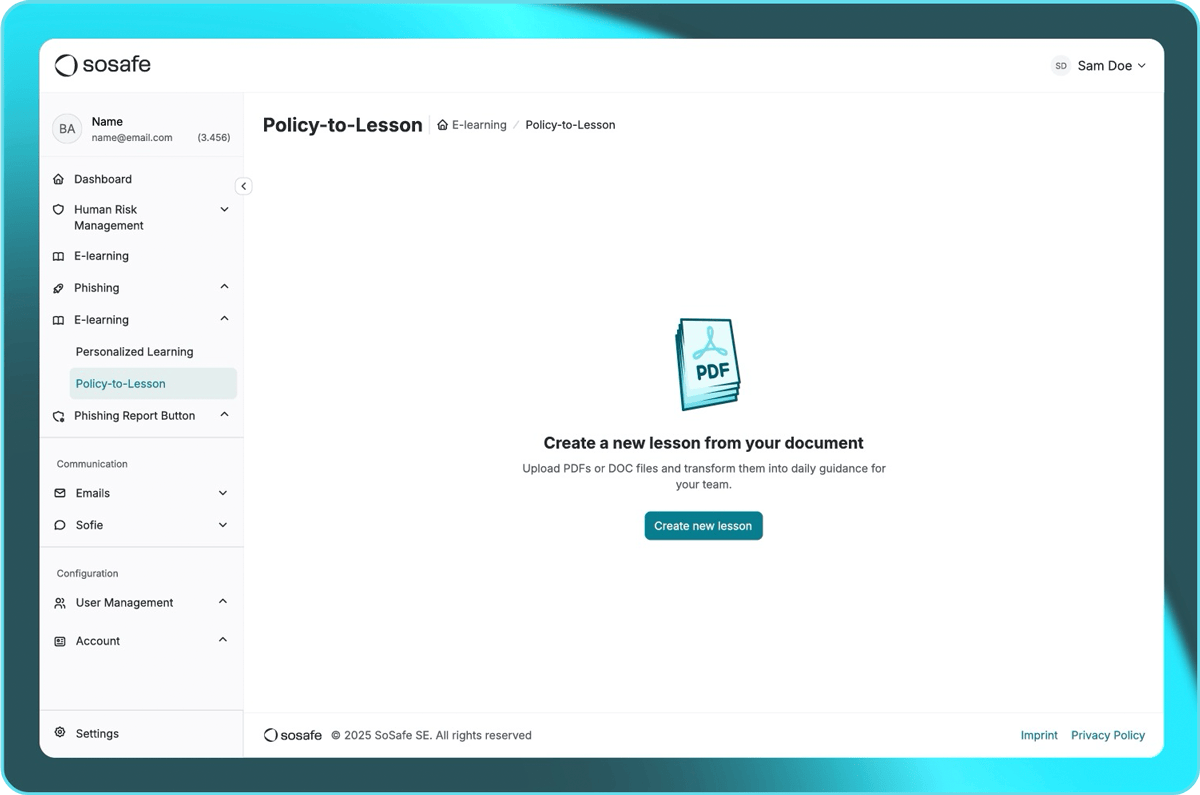
Drop in the hospital’s existing policy or a GMP procedure. The first draft of the lesson comes back with your own wording still in it.
One button, one queue
Suspicious mail goes into one triage queue at the press of a button, and Sofie, our AI copilot, fields the follow-up questions in Outlook, Slack or Teams.
Evidence for the audit
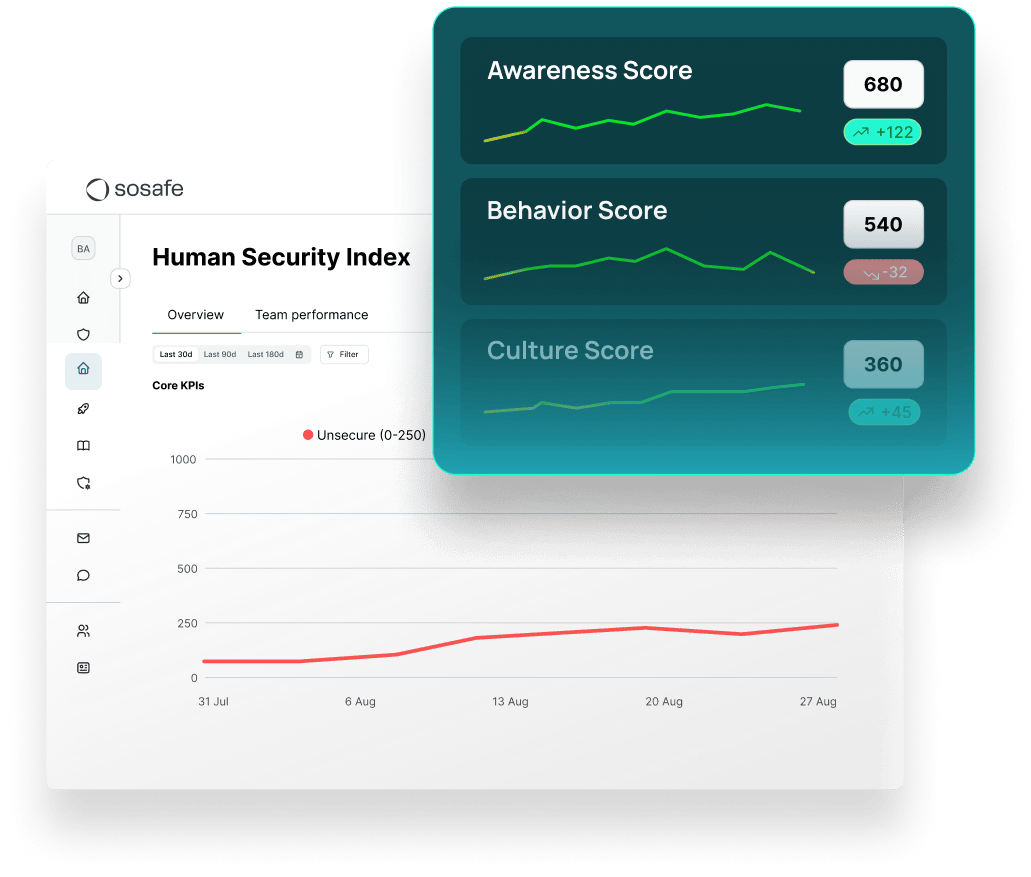
An NIS2, ISO/IEC 27001 or GDPR report takes under an hour to pull, and a single figure follows behaviour change across the whole year.

“By weaving human risk management into the fabric of our security culture, we not only shield our operations from immediate threats but also fortify our resilience against the evolving challenges of tomorrow”

Benita Rojewski
Security Officer at Klinikum Darmstadt, a German city hospital
88%
knowledge retention after 12 months
90%
reduction in risky interactions
80%
reporting threats within 12 months
15 min
per week to run the full programme

Measurable impact
Based on aggregated data from our customer base, used to identify real trends across live programmes.
Built to sit inside the systems your hospital, clinic, or life sciences organisation already runs
Cyber security in a healthcare environment has to work with what is already running, not alongside it.
Integrations
See all the integrations




Compliance
See all our certificationsGDPR Compliant
German Engineered
EU Hosted
Healthcare cyber security FAQs
See SoSafe at work in a hospital, clinic or life sciences setting










 Reports
 Guides
 Blog
 Glossary
 Perks
 Customer stories
 Webinars
 Replays
 Podcast
 All events
 Signal Security Summit
 Danger Lab
 Careers
 News & press
 Contact
